


Key Takeaways
- The Types of Badminton Court directly impact gameplay and player safety
- Synthetic PVC and PU are widely preferred for indoor courts
- Concrete should only be used as a base, not a playing surface
- Choosing the right flooring depends on usage, not just budget
- Working with a Badminton Court Flooring Manufacturer in India helps avoid costly mistakes
When players talk about improving their badminton game, most focus on technique, fitness, or equipment. But here’s the part many overlook—the court surface itself. The type of surface you play on directly affects grip, movement, injury risk, and even shot control.
Whether you are a sports facility owner, academy operator, or serious player, understanding the Types of Badminton Court is not just useful—it’s essential for making the right investment. A poorly chosen surface can slow down performance, cause fatigue, or even lead to injuries over time. In this blog, we break down seven commonly used badminton court surfaces, how they behave in real play conditions, and what they actually mean for your performance and long-term usage.
Understanding Why Court Surface Matters
Before diving into the types, it’s worth getting clear on what a badminton surface actually influences:
- Player traction and foot grip
- Shock absorption and joint safety
- Shuttle bounce consistency
- Speed of gameplay
- Maintenance and durability
For example, a beginner playing on concrete might struggle with movement, while the same player on a wooden or synthetic surface feels faster and more controlled. That difference is not skill—it’s surface physics.
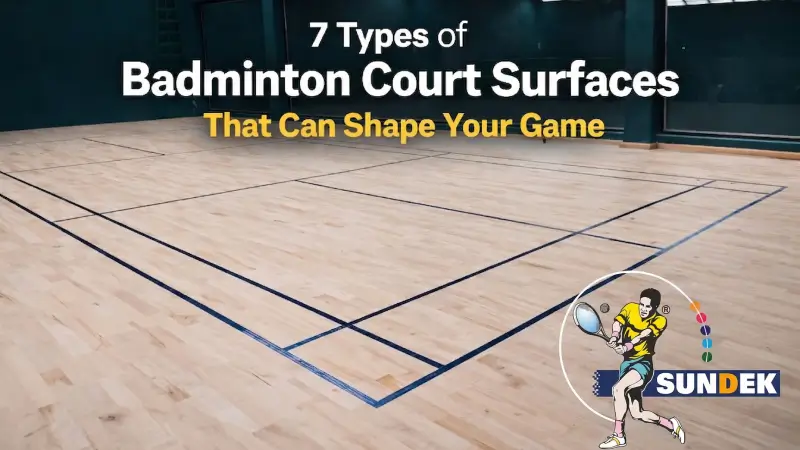
7 Types of Badminton Court Surfaces
1. Wooden Flooring
Wooden courts are often seen in professional indoor arenas and tournaments.
- Offers excellent shock absorption
- Smooth surface for controlled movement
- Ideal for professional-level gameplay
However, wood requires proper maintenance and controlled indoor conditions. If not managed well, it can warp or become slippery.
2. Synthetic PVC Flooring
This is one of the most popular modern options and widely preferred by any Badminton Court Flooring Manufacturer.
- Provides consistent grip and cushioning
- Easy to install over base surfaces
- Available in different thickness levels
In real-world usage, synthetic PVC works well for academies and multi-use sports halls because it balances performance and practicality.
3. Acrylic Flooring
Acrylic surfaces are more common in outdoor or semi-indoor courts.
- Durable and weather-resistant
- Good for multipurpose courts
- Moderate grip and bounce
That said, it lacks the cushioning required for high-intensity badminton, making it less ideal for serious players.
4. Concrete Flooring
Concrete is usually the base layer, not the final playing surface—but in some cases, it’s used directly.
- Highly durable and low cost
- Minimal maintenance
The downside is obvious—almost no shock absorption. Long-term play on concrete can be harsh on knees and ankles.
5. Rubber Flooring
Rubber surfaces are gaining traction in training environments.
- High shock absorption
- Slip-resistant surface
- Suitable for beginner training zones
However, rubber may slightly reduce speed, which can affect competitive gameplay.
6. Polyurethane (PU) Flooring
PU flooring is a seamless surface used in high-end indoor facilities.
- Smooth, joint-free finish
- Strong grip and elasticity
- Comfortable for long matches
From a decision standpoint, PU works well when aesthetics and performance both matters.
7. Vinyl Sports Flooring
Vinyl flooring is often confused with PVC but comes with layered construction.
- Cushioned backing for comfort
- Uniform playing experience
- Suitable for indoor courts
Many facility owners in India prefer vinyl through a trusted Badminton Court Flooring Manufacturer in India due to its balance of durability and player comfort.
How to Choose the Right Surface for Your Court
Choosing the right surface is not about picking the “best”—it’s about picking what fits your use case.
1. Identify the Purpose
- Training academy
- Professional tournaments
- School or recreational use
A training centre might prioritise cushioning, while a tournament court needs speed and precision.
2. Consider Player Safety
Look for surfaces that reduce joint stress, especially if players train regularly.
- PVC and PU are safer for long sessions
- Concrete should be avoided as a final surface
3. Evaluate Maintenance Needs
Some surfaces demand regular upkeep.
- Wood requires controlled environments
- Synthetic options are easier to maintain
4. Budget vs Long-Term Value
Cheap surfaces often cost more in the long run due to repairs or player dissatisfaction.
A slightly higher investment in quality flooring often pays off through durability and better user experience.
Practical Example: Choosing the Right Surface
Imagine you’re setting up a badminton academy in an urban area. You expect daily training sessions and beginner-to-intermediate players.
- Concrete base + PVC synthetic flooring works well
- It provides cushioning, reduces injuries, and stays within budget
Now compare that to a professional indoor arena—wood or PU flooring would be a better fit due to performance demands.
The right decision always depends on how the court will be used, not just how it looks.
Common Mistakes to Avoid
- Choosing based only on cost
- Ignoring player safety and comfort
- Skipping professional installation
- Not considering long-term maintenance
These mistakes often lead to rework, which is far more expensive than getting it right the first time.
Why Work with a Professional Manufacturer
When you partner with an experienced Badminton Court Flooring Manufacturer, you don’t just get materials—you get guidance.
- Surface recommendation based on usage
- Proper installation techniques
- Long-term performance understanding
This becomes especially important in India, where climate conditions and usage patterns vary widely.
Why choose us
At Sundek Sports Private Limited, we’re a bit different when it comes to badminton court flooring – we don’t just try to push our own solution on you, instead we take the time to really get to know what you’re looking for and what will actually work for your specific situation. Whether you’re setting up a training academy, a school court or a high-end competition facility, our team is all about helping you figure out what you need, not just trying to sell you something. We talk to you about how the court will be used, the level of play you’re expecting, and how you plan on keeping it all running smoothly in the long term – before we even start recommending a surface. That way we can avoid all the common pitfalls that end up causing discomfort or a whole lot of costly repairs down the line. From picking the right materials to giving you the guidance you need to get it all installed right, our goal is to give you flooring solutions that really hold up in the real world, not just in theory.
Conclusion
What is the best flooring for an indoor badminton court? Well, the answer isn’t always the most expensive or the one everyone else is using – it’s about finding the surface that does what you need it to do, supports the players, and still stays practical over time.
For a lot of indoor setups, synthetic PVC flooring makes a lot of sense – it’s a great balance of comfort, durability and cost-effectiveness. But, if you’re running a high-level competition facility, something like wooden or PU flooring might give your players that extra edge they need.
At the end of the day, it all comes down to working out how you’re going to use the court and making a choice that really supports that usage. Don’t rush, take the time to work out what you really need, and get some proper expert advice along the way. A well-chosen floor doesn’t just support the game – it genuinely makes it better.
Upgrade your badminton court with expert guidance. Call +91 93203 08938 or email info@sundek.in to discuss the right flooring solution for your facility today.
FAQs
Which is the best badminton court surface for professional play?
Wooden and PU flooring are commonly used for professional courts due to their balance of grip, cushioning, and performance.
Is synthetic PVC flooring good for badminton courts?
Yes, it offers excellent cushioning, grip, and durability, making it ideal for academies and indoor sports facilities.
Can badminton be played on concrete flooring?
While possible, it is not recommended for regular play due to lack of shock absorption and higher injury risk.
How do I choose a badminton court surface?
Consider usage, player level, budget, and maintenance requirements before selecting a surface.
Why should I work with a badminton court flooring manufacturer?
A professional Badminton Court Flooring Manufacturer provides proper guidance, installation support, and long-term reliability.