Choosing the best volleyball court flooring does not need to be challenging. Start by listing your priorities: safety, cost, durability, or player experience. Compare materials side-by-side, weighing pros and cons. For example, rubber offers great cushioning but may slow down fast-paced games, while synthetic surfaces balance speed and maintenance. Visit courts with different floors to see them in action. Ask experts about hidden costs, like installation or climate-specific needs. Remember, the right floor adapts to your players’ skills—beginners need forgiving surfaces, while pros prefer responsive ones. Regular maintenance, like cleaning and inspections, keeps the court in top shape and extends its life. Whether you’re building new or upgrading, the effort pays off in smoother games and fewer injuries. Ready to start? Reach out to reputable volleyball court flooring manufacturers and suppliers to request product samples and obtain detailed price estimates to meet your project requirements. This approach allows you to compare options, assess quality, and make an informed decision for your court. Your dream volleyball court is only a few smart choices away. Whether you’re building a court for a school, club, or professional arena, this guide covers everything you need to make the best choice.
Why the Best Volleyball Court Flooring Matters
The highest-quality and best volleyball court flooring plays an important role because it protects players and boosts performance. A quality surface reduces the risk of slips, falls, and joint injuries by providing proper grip and cushioning. When players dive for the ball or jump for a spike, the flooring absorbs impact, protecting knees and ankles from strain. Consistent ball bounce is another key factor—uneven surfaces can ruin gameplay, making it frustrating for players and affecting match outcomes. Durable flooring also saves money in the long run, as it withstands heavy use without cracking or wearing down quickly. Whether it’s a school court or a professional arena, the right surface ensures fair play, reduces maintenance costs, and keeps the game enjoyable for everyone. Investing in good flooring isn’t just about looks; it’s about creating a safe, reliable space where players can focus on their skills and love for the game.
Types of Volleyball Court Flooring
Wooden Volleyball Court Flooring
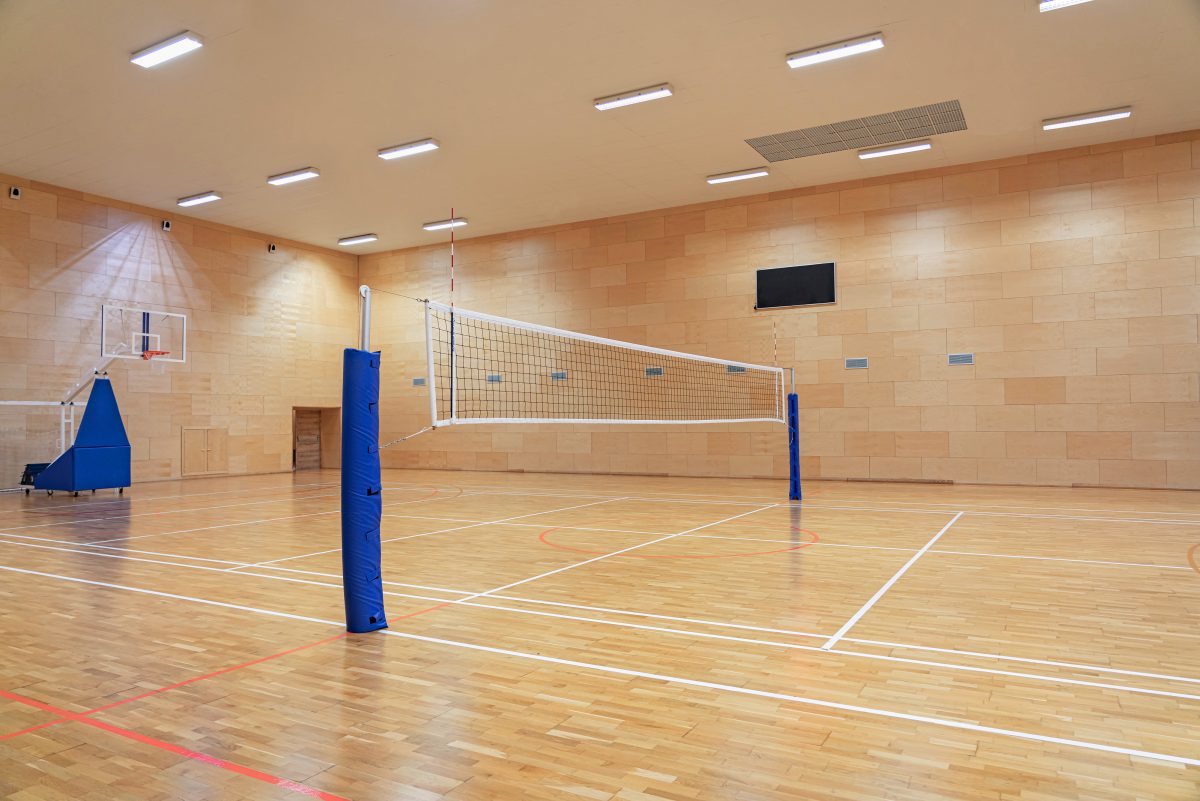
Pros:
- Natural Feel: Provides superior shock absorption and a traditional playing feel.
- Consistent Bounce: Ideal for competitive play due to predictable ball response.
- Durability: High-quality maple or oak lasts decades with proper care.
Cons:
- High Maintenance: Requires regular sanding, sealing, and refinishing.
- Cost: Expensive upfront and long-term due to upkeep.
- Climate Sensitivity: Warps in humidity or extreme temperatures if not climate-controlled.
Maintenance:
- Weekly cleaning with specialized wood cleaners.
- Annual sanding and resealing to prevent wear.
- Immediate repair of scratches or dents to avoid splinters.
Cost: The cost ranges between ₹800 and 1,500 per square foot, varying based on the type of wood and finishing options selected.
Synthetic Volleyball Court Flooring
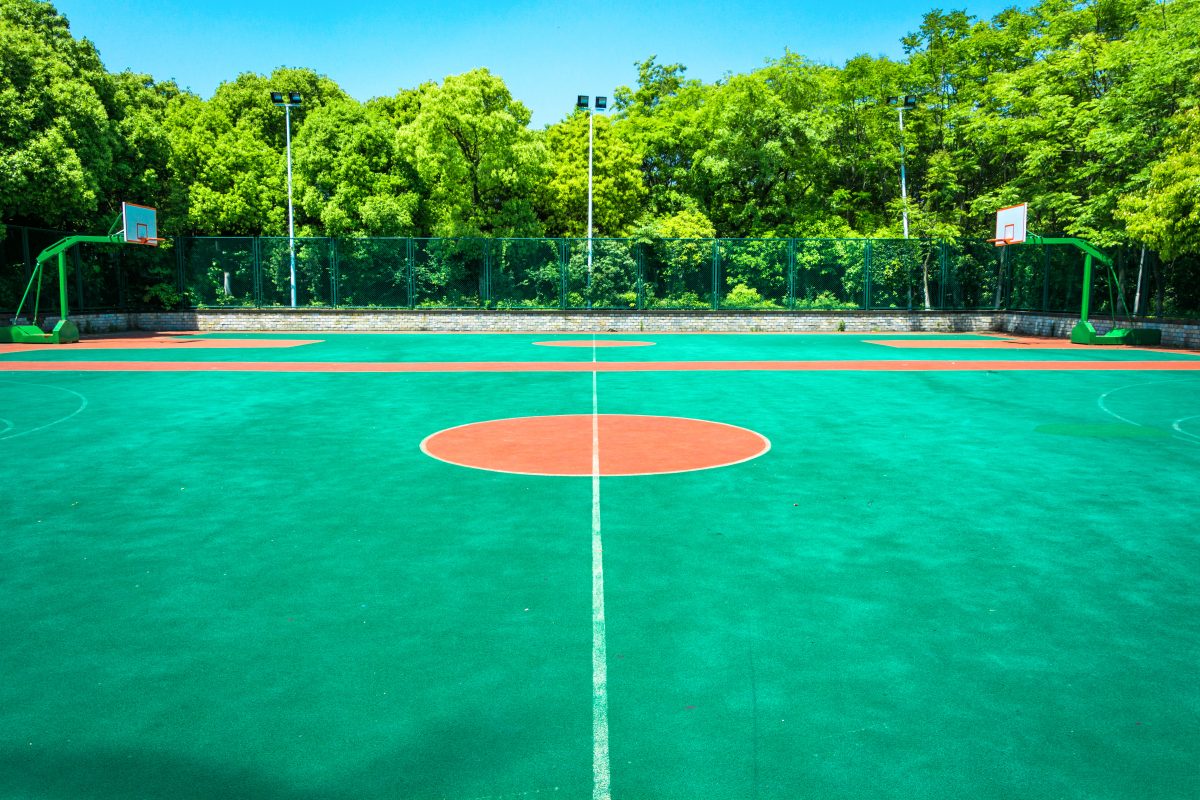
Pros:
- Low Maintenance: Effortlessly clean using water and a gentle detergent for hassle-free maintenance.
- Weather-Resistant: Performs well in humid or rainy climates.
- Customizable: Available in colors, logos, and shock-absorbent layers.
Cons:
- Heat Retention: Can become heated under direct sunshine.
- Initial Cost: The price typically falls within the range of ₹500 to ₹1,000 per square foot, placing it in the mid-tier segment based on material quality and finish options available
- Fading: UV-resistant coatings are needed for outdoor use.
Durability:
- Lasts 10–15 years with minimal repairs.
- Resistant to cracks, fading, and moisture damage.
Playability:
- Offers moderate shock absorption (adjustable with cushioned layers).
- Consistent ball bounce for training and matches.
Rubber Volleyball Court Flooring
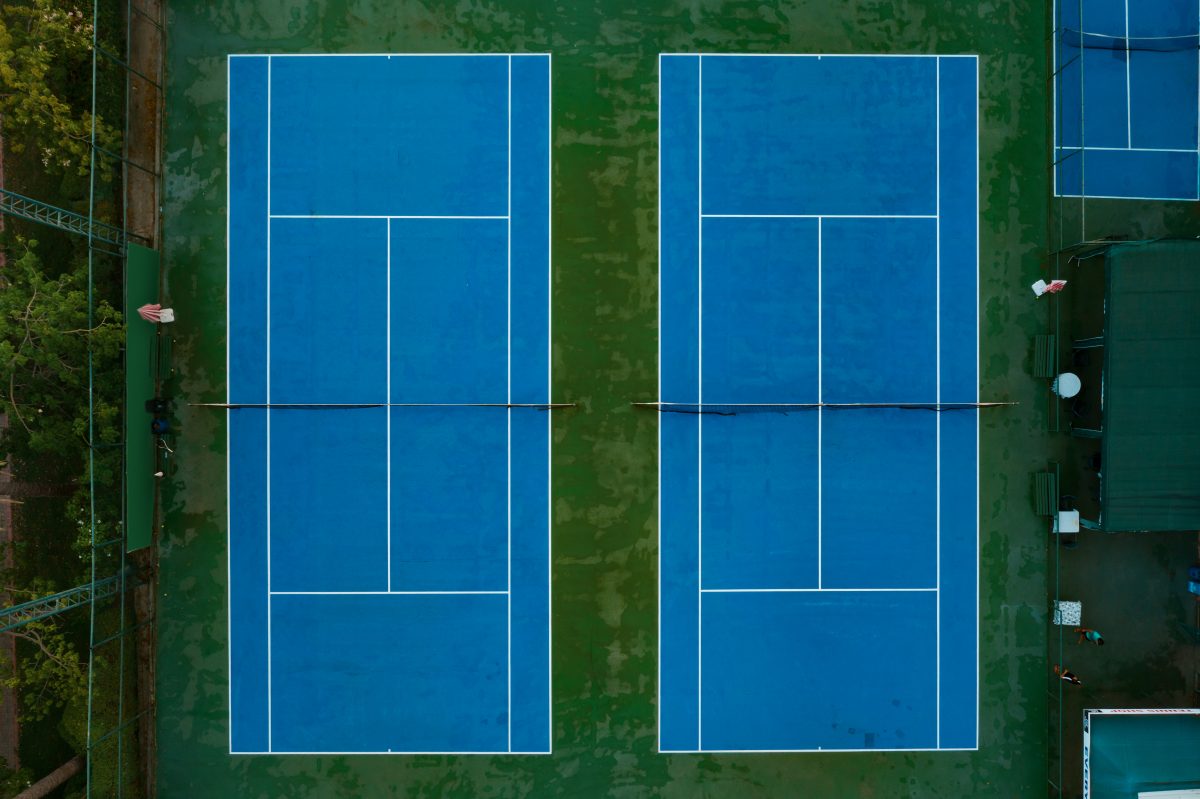
Pros:
- Shock Absorption: Reduces joint stress, ideal for high-impact play.
- Slip Resistance: Textured surfaces prevent slips, even when wet.
- Eco-Friendly: Often made from recycled materials.
Cons:
- Ball Bounce: ASofter surface may slow gameplay.
- Installation Complexity: Requires professional installation for seamless finishes.
- Cost: ₹600–1,200 per sq. ft., depending on thickness and quality.
Performance:
- Ideal for recreational play and junior training.
- Reduces fatigue during long matches.
Factors to Consider When Choosing Volleyball Court Flooring
Indoor vs. Outdoor Volleyball Courts
- Indoor Volleyball Courts: Prioritize shock absorption (wood or rubber).
- Outdoor Volleyball Courts: Choose UV-resistant synthetics or rubber with drainage layers.
- Climate: Opt for materials that handle humidity (synthetics) or temperature swings (rubber).
Budget
- Short-Term: Vinyl or basic rubber tiles (₹400–700 per sq. ft.).
- Long-Term: Invest in wood or premium synthetics for lower lifetime costs.
Player Safety
- Impact Absorption: Look for surfaces with ≥25% force reduction.
- Traction: Avoid overly smooth finishes to prevent slips.
- Injury Prevention: Cushioned layers reduce ankle and knee strain.
Maintenance
- Low Effort: Synthetics need only occasional rinsing.
- High Effort: Wood requires seasonal refinishing.
- Lifespan: Quality surfaces last 10+ years with proper care.
Tips for Choosing the Best Volleyball Court Flooring in India
- Consult Experts: Professionals assess your space, usage, and budget to recommend materials.
- Player Needs: Junior players benefit from softer rubber, while pros prefer responsive wood.
- Test Surfaces: Play on sample courts to check comfort, bounce, and grip.
- Read Reviews: Learn from schools or clubs using similar flooring.
- Plan Ahead: Ensure proper drainage, lighting, and boundary space during installation.
Maintenance Checklist
- Daily: Sweep debris and check for spills.
- Monthly: Inspect seams/cracks (synthetics) or warping (wood).
- Yearly: Apply protective coatings or resurface high-traffic zones.
Why Choose Sundek Sports Private Limited?
For anyone searching for the best volleyball court flooring, Sundek Sports Private Limited stands out as a top volleyball court flooring manufacturer in India. With years of experience and a proven track record, we deliver high-quality, durable sports flooring solutions for both indoor and outdoor volleyball courts. Their products are designed to meet international standards, ensuring excellent shock absorption, strong traction, and long-lasting performance. Sundek offers a wide range of options, including wooden, synthetic, and modular flooring, all tailored to suit different needs and budgets. Each sports flooring system is designed to enhance player safety, comfort, and gameplay, making them a preferred choice for schools, sports clubs, and professional arenas. From expert consultation to seamless installation, Sundek Sports Private Limited provides end-to-end service, helping you create a volleyball court that delivers top performance and lasting value, specializing in:
- Custom Solutions: Designed surfaces for indoor/outdoor, competitive/recreational use.
- Safety Compliance: Surfaces meet international standards for shock absorption and slip resistance.
- Expert Installation: Skilled teams handle everything from site prep to finishing touches.
- Affordable Packages: Transparent pricing for all budgets, including maintenance plans.
Conclusion
Choosing the best volleyball court flooring provides player safety, enhances performance, and maximizes your investment. Whether you select classic wood, versatile synthetics, or cushioned rubber, prioritize quality and expert guidance. Ready to build a championship-ready court? Contact Sundek Sports Private Limited at +91 98980 88059 or info@sundek.in today for a free consultation!
FAQ
1. What are the most common materials used for volleyball court flooring?
The most popular volleyball court flooring materials include wood, PVC, vulcanized rubber, vinyl, and hard plastic tiles. Each offers unique benefits in terms of durability, maintenance, and playability for both indoor and outdoor courts.
2. Which flooring is perfect for indoor volleyball courts?
PVC and vulcanized rubber are popular for indoor volleyball courts due to their shock absorption, slip resistance, and consistent ball bounce. These materials also meet sports performance standards and are comfortable for players.
3. Can volleyball court flooring be used outdoors?
Yes, outdoor volleyball courts often use hard plastic tiles or weather-resistant rubber flooring. These materials are UV-resistant, allow water drainage, and withstand exposure to sun and rain, making them ideal for outdoor environments.
4. How is volleyball court flooring installed?
Volleyball court flooring can be made permanently (glued down) or temporarily (using adhesive tape or interlocking systems). Removable floors are easier to store and replace, while fixed floors are more permanent and cost-effective for frequent use.
5. What maintenance does volleyball court flooring require?
Maintenance depends on the material. Poured and synthetic floors are easy to clean and maintain, usually requiring regular sweeping and occasional mopping. Wood floors need refinishing, and outdoor tiles may need periodic washing to remove debris.
6. How does flooring affect player safety?
Proper volleyball flooring provides shock absorption and traction, reducing the risk of slips, falls, and joint injuries. Surfaces with good grip and cushioning help keep players safe during jumps, dives, and fast movements.
7. What is the estimated duration of volleyball court floors?
Durable materials like vulcanized rubber and high-quality PVC can last 10–15 years or more with proper care. Wood floors can last decades if regularly maintained, while outdoor tiles are designed for long-term use in harsh conditions.
8. Can I install volleyball court flooring myself?
Some flooring types, like interlocking plastic tiles or vinyl planks, are DIY-friendly and easy to install. However, professional installation is recommended for wood, poured, or glued-down surfaces to ensure safety and performance.
9. What subfloor is recommended for volleyball court flooring?
For indoor courts, a clean, dry, and stable subfloor like concrete, tile, or wood is ideal. Outdoor courts often use concrete or asphalt pads for stability and drainage. Proper subfloor preparation is crucial for longevity and safety.
10. How do I choose the right volleyball court flooring?
Consider your court’s location (indoor or outdoor), budget, player needs, and maintenance capacity. Test samples, consult experts, and choose flooring that meets safety standards and performance requirements for the best results.