Key Takeaways
- The Best Flooring for Indoor Badminton Court depends on usage and player needs
- Synthetic PVC is a practical choice for most indoor facilities
- Wooden and PU flooring suit professional environments
- Player safety and comfort should be prioritised over cost
- Working with an Indoor Badminton Court Manufacturer helps avoid costly mistakes
Choosing the right flooring for an indoor badminton court is where many projects quietly go wrong. On paper, most surfaces look similar—durable, smooth, and “sports-friendly.” But once players step in, the difference becomes obvious. Some courts feel fast and responsive, while others feel hard, slippery, or tiring within minutes.
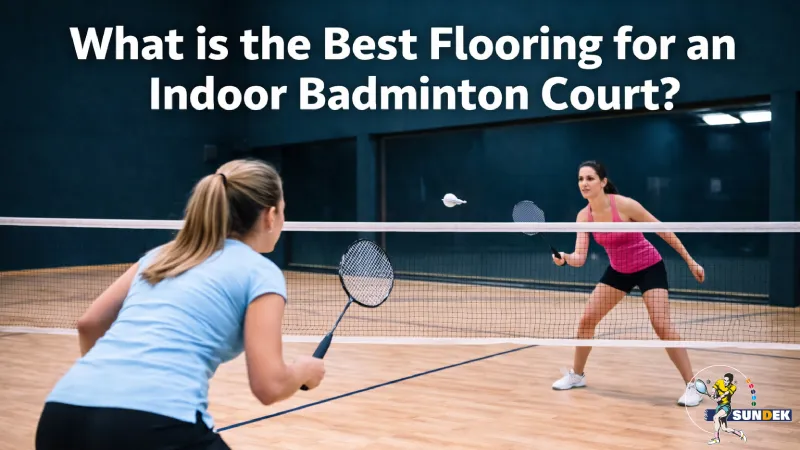
This is exactly why the question—what is the Best Flooring for Indoor Badminton Court—is more than just a technical decision. It directly impacts player safety, performance, and long-term usability. Whether you are building a sports facility, setting up an academy, or upgrading an existing court, the flooring you choose shapes how the game is played. Let’s break it down in a practical way so you can make a decision that actually works in real conditions.
Understanding Why Court Surface Matters
Before comparing materials, it’s important to understand what “best” actually means in this context. It’s not about one universal option—it’s about the right balance of performance and practicality.
A well-designed indoor badminton flooring typically offers:
- Good grip for quick directional movement
- Shock absorption to reduce strain on joints
- Even surface for consistent shuttle response
- Durability under regular play
- Low to moderate maintenance requirements
If a surface misses even one of these, it starts affecting gameplay. For example, a floor with poor grip can slow footwork, while a hard surface can increase injury risk over time.
Types of Flooring Used in Indoor Badminton Courts
1. Synthetic PVC Flooring
This is widely considered one of the most practical options today and is commonly recommended by any experienced Indoor Badminton Court Manufacturer.
- Cushioned layers reduce impact on knees and ankles
- Consistent grip across the surface
- Easy installation over a concrete or wooden base
- Suitable for academies and training centres
In real-world setups, PVC flooring works well for facilities that see daily usage. It offers a balance between comfort and durability without becoming too expensive to maintain.
2. Wooden Flooring
Wood has long been associated with professional indoor courts and tournament settings.
- Natural shock absorption
- Smooth and controlled playing surface
- Preferred for high-level matches
However, wood requires controlled indoor conditions and regular care. Without proper maintenance, it can become slippery or uneven.
3. Polyurethane (PU) Flooring
PU flooring is a seamless option used in modern sports facilities.
- Smooth, joint-free finish
- Strong grip and elasticity
- Comfortable for extended gameplay
It works well in premium indoor courts where both performance and appearance matter. But installation needs precision, which makes working with a skilled Indoor Badminton Court Manufacturer important.
4. Vinyl Sports Flooring
Vinyl flooring is often used in indoor multi-sport facilities.
- Cushioned backing layers
- Uniform surface performance
- Suitable for moderate to heavy use
For facility owners who want flexibility across different sports, vinyl can be a practical option.
Which Flooring is Actually the Best?
If you’re looking for a direct answer—there is no single “best” option for every situation. But in most indoor badminton setups, synthetic PVC flooring stands out as the most balanced choice.
Here’s why:
- It supports player movement without excessive hardness
- It performs consistently across different skill levels
- It fits both budget-conscious and performance-focused projects
That said, for professional tournament environments, wooden or PU flooring may be more suitable due to their refined playing feel.
The right answer depends on how the court will be used—not just what looks good in a brochure.
How to Choose the Best Flooring for Indoor Badminton Court
1. Define the Purpose of the Court
- Training academy
- Professional competition
- School or recreational use
Each use case demands a slightly different flooring approach.
2. Evaluate Player Frequency
- Daily high-traffic usage requires durable surfaces like PVC or vinyl
- Occasional usage allows for more flexibility in material choice
3. Prioritise Player Safety
Look for surfaces that reduce stress on joints, especially if players train regularly.
- PVC and PU offer better cushioning
- Hard surfaces should be avoided as final layers
4. Consider Maintenance Requirements
- Wooden flooring needs regular care
- Synthetic options are easier to manage
This becomes important for long-term operational costs.
5. Balance Budget with Long-Term Value
Lower upfront cost often leads to higher maintenance or early replacement.
A slightly higher investment in the right flooring usually delivers better value over time.
Practical Example: Real Decision Scenario
Let’s say you’re setting up a badminton academy with 4 indoor courts. You expect daily training sessions and a mix of beginner and intermediate players.
- Choosing synthetic PVC flooring over a concrete base makes sense
- It reduces player fatigue and injury risk
- It also keeps maintenance manageable
Now compare that with a professional indoor stadium. In that case, wooden or PU flooring becomes a better fit due to performance expetions.
The key takeaway—your flooring should match your usage, not just your budget.
Common Mistakes to Avoid
- Selecting flooring based only on cost
- Ignoring shock absorption and player comfort
- Skipping professional installation
- Not planning for long-term maintenance
These decisions often lead to rework, which ends up costing more than doing it right the first time.
Why Work with an Indoor Badminton Court Manufacturer
A reliable Indoor Badminton Court Manufacturer does more than supply materials. They help translate your requirement into a working solution.
- Recommend the right flooring type based on usage
- Guide on base preparation and installation
- Help avoid common design and execution mistakes
This guidance becomes critical, especially for first-time facility owners who may not fully understand how different surfaces behave over time.
Why Choose Us
At Sundek Sports Private Limited, we never go into badminton court flooring with a one-size-fits-all attitude. We take the opposite approach & really get to know what our clients are looking for. Whether it’s a training academy, school gym or full-blown competitive facility we figure out exactly how the court will be used, the level of play they’re expecting and what kind of maintenance they’re willing to do before we even start talking about the good stuff – ie what flooring is going to work for them. This way we avoid a lot of the common pitfalls that end up causing problems mid-job – like discomfort or really costly repairs down the line. Right from start to finish – from choosing the right materials to giving top-notch installation tips, we’re all about delivering flooring solutions that can keep up with real-world conditions & not just look good on paper.
Conclusion
When it comes to finding the Best Flooring for Indoor Badminton Court, it’s not about throwing a bunch of cash at it or opting for the most popular option. It’s about choosing a surface that gets the job done for you, supports your players and stays practical from day one.
Most indoor setups get a good balance of comfort, durability & cost-effectiveness from synthetic PVC flooring, but high-level competitive environments can often benefit from wooden or PU flooring for a better all-around playing experience.
At the end of the day, it all comes down to understanding how you plan to use the court – so do yourself a favour & take some time to figure out what you need & work with the right people to get it right in the first place. A well-chosen floor is more than just a pretty face – it actually makes the game better. just support the game – it genuinely makes it better.
Planning an indoor badminton court? Call +91 98980 88059 or email info@sundek.in get expert guidance on choosing the right flooring for your facility.
FAQs
What is the best flooring for indoor badminton courts?
Synthetic PVC flooring is widely preferred for its balance of cushioning, grip, and durability in most indoor setups.
Is wooden flooring better than PVC for badminton?
Wooden flooring offers a premium playing experience but requires more maintenance, while PVC is more practical for regular use.
Can badminton courts be made on concrete flooring?
Concrete is typically used as a base layer, not as the final playing surface due to lack of cushioning.
How long does badminton court flooring last?
The lifespan depends on usage and maintenance, but well-installed synthetic flooring can last several years.
Why hire an indoor badminton court manufacturer?
An Indoor Badminton Court Manufacturer provides expert guidance, proper installation, and helps select the right flooring for your needs.