
Tennis is a sport that demands agility, precision, and endurance, and the right flooring plays a key role in enhancing performance and safety. The surface of a tennis court directly influences how the game is played, affecting factors such as ball bounce, player comfort, and overall game speed. Whether you’re an amateur or a professional player, choosing the right court surface is essential for optimal play. In this guide, we’ll explore the most popular types of tennis court flooring—concrete, clay, grass, hard courts, and artificial turf. Each surface offers unique benefits and considerations, including maintenance needs, durability, and the type of gameplay it supports. By understanding the pros and cons of each, you can make an informed decision based on your needs and preferences. Whether you’re building a professional facility or a recreational court, selecting the ideal surface is crucial for maximizing both the player experience and the longevity of the court.
Concrete Courts
Concrete courts are some of the most frequent surfaces used in public and private tennis spaces. They are known for their durability and low maintenance, making them ideal for high-traffic areas. Concrete courts are made of a cement-based surface and are typically painted with a layer of acrylic coating to provide color and texture.
Advantages:
Durable and long-lasting.
Minimal maintenance required.
Can withstand extreme weather conditions.
Provides a consistent bounce for the ball, which is crucial for player performance.
Disadvantages:
Harder on joints, leading to potential discomfort for players.
High bounces might make fast-paced games more difficult.
Famous Tournaments Played on Concrete:
The US Open is one of the world’s most prominent tennis championships since it is played on hard courts, which are concrete surfaces.
Clay Courts
Clay courts are popular within players who enjoy a slower, more strategic game. Clay courts are constructed from crushed stone, brick, or shale and provide a distinct playing experience as compared to other surfaces.
Advantages:
A slower playing surface allows for longer rallies and more strategic play.
The surface absorbs moisture, making it less prone to weather-related interruptions.
Softer on players’ joints, reducing the risk of injury.
Disadvantages:
Requires significant maintenance, including frequent resurfacing.
The surface can be slippery when wet.
Slower ball speeds can sometimes lead to less exciting matches for fans.
Famous Tournaments Played on Clay:
The French Open tournament takes place on clay courts, making it one of tennis’ most well-known and demanding competitions.
Grass Courts
Grass courts are the traditional tennis surface, offering a fast, smooth, and low-bounce playing experience. These courts are made from natural grass and require regular maintenance to stay in good condition.
Advantages:
Fast playing surface with low bounce makes for fast-paced, exciting games.
Soft on the joints, offering a more comfortable playing experience.
The surface encourages variety in play, with balls that can be unpredictable.
Disadvantages:
High maintenance costs, as the grass needs to be mowed and tended regularly.
The surface can become uneven, especially after rain.
Grass courts can wear out quickly, requiring frequent repairs.
Famous Tournaments Played on Grass:
Wimbledon, one of tennis’s most prestigious tournaments, is played on grass courts. The tradition of grass courts at Wimbledon has been maintained for over a century.
Hard Courts
Hard courts are the most common and versatile type of tennis court. Hard courts, which are made of asphalt or concrete and coated in an acrylic or synthetic covering, have characteristics of both clay and grass courts. They offer a medium-paced game with a consistent bounce.
Advantages:
Moderate bounce and speed make it easier for players to control the ball.
Minimal maintenance is required compared to clay courts.
Offers a balanced playing field for all styles of play.
Disadvantages:
Harder surface can lead to more joint strain for players.
The surface can become slippery if not properly maintained.
Famous Tournaments Played on Hard Courts:
The US Open and Australian Open are both played on hard courts, making it one of the most widely used surfaces for professional tennis.
Artificial Turf
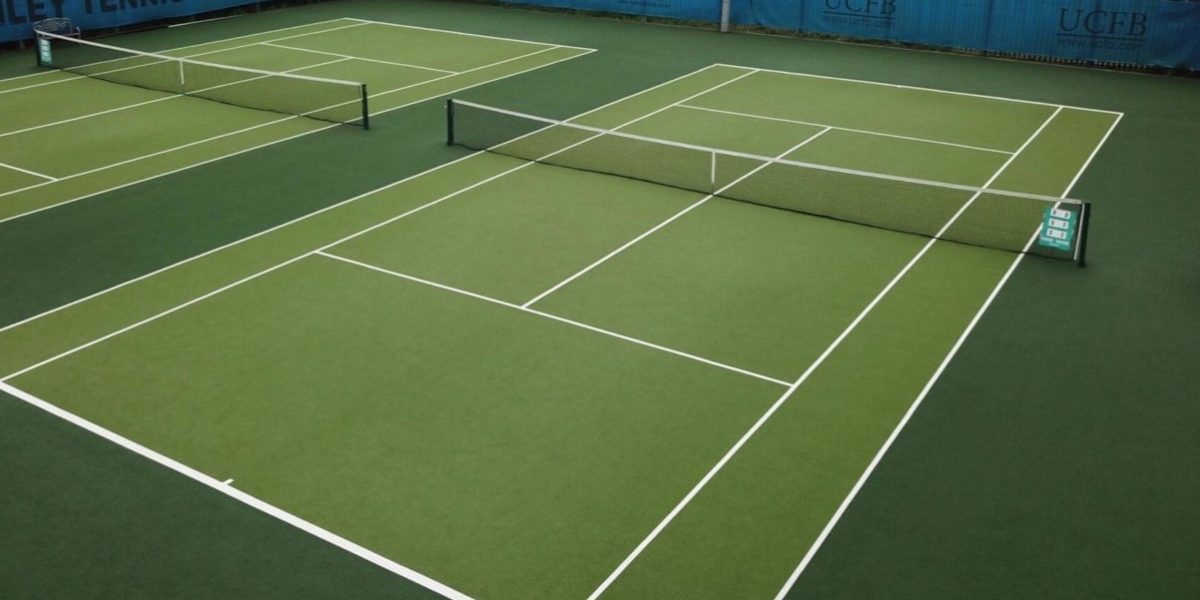
Artificial turf courts are designed to mimic the playing characteristics of natural grass. They are constructed from synthetic fibers and offer a more durable, weather-resistant option for tennis facilities.
Advantages:
Mimics the speed and feel of grass courts.
Requires less maintenance compared to natural grass.
More durable and can withstand varying weather conditions.
Disadvantages:
Can be harder on players’ joints than natural grass.
May not offer the same authenticity as real grass courts.
Some surfaces can feel too fast for certain playing styles.
Growing Popularity:
Artificial turf is becoming increasingly popular in recreational tennis facilities and smaller clubs due to its low maintenance and cost-effectiveness.
Why Choose the Right Tennis Court Surface?
Choosing the right surface for a tennis court is essential to both player performance and safety. Each court surface offers different experiences, and the best choice depends on your specific needs, whether you’re a professional player, a casual enthusiast, or managing a facility.
Performance: The surface impacts ball bounce, pace, and game flow. Players need to consider how different surfaces impact their style of play.
Safety: Surfaces such as clay and grass are gentler on the joints, reducing the risk of injuries, while hard courts may cause strain over time.
Durability: The durability of a court impacts its long-term usability. Concrete and hard courts are known for their longevity, while grass courts require more maintenance.
Cost and Maintenance: Grass and clay courts can be expensive and time-consuming to maintain. Hard courts and artificial turf, on the other hand, are relatively low-maintenance.
Why Choose Sundek Sports Private Limited?
Sundek Sports Private Limited is a trusted name when it comes to high-quality sports court flooring solutions. With years of experience in the industry, they provide reliable and durable flooring options for various sports, including tennis, badminton, basketball, and more. Their commitment to excellence is reflected in their high-performance materials, designed to enhance the player experience while ensuring safety and durability. Whether you are building a professional sports facility or a recreational court, Sundek Sports offers tailored flooring solutions that meet your specific needs. Their products are known for their superior quality, easy maintenance, and long-lasting performance. The company also offers exceptional customer service, providing expert guidance and support from installation to ongoing maintenance. Sundek Sports is one of the leading tennis court flooring manufacturers in India if you’re seeking high-quality flooring that delivers on both performance and aesthetics. Contact them today to find the perfect flooring solution for your sports court needs.
Conclusion
Understanding the various types of tennis court surfaces helps in making an informed decision when setting up a facility or choosing the best court for your playing preferences. Each surface offers advantages, like as the speed of grass courts, the long-term reliability of concrete courts, and the planning of clay courts.
When deciding on the type of court to invest in, consider factors such as player experience, maintenance costs, and the level of play. Every surface offers to different types of players and playing styles, therefore it is essential to select the appropriate court surface for your needs. Make sensible choices to maintain the durability and pleasure of your tennis court. For more details and expert advice on selecting the right surface, contact Sundek Sports at +91 98980 88059 or email us at info@sundek.in.
FAQ
What kind of flooring is perfect for tennis courts?
The most suitable flooring is determined by several aspects, including price, care, and desired performance. Hard courts, grass, clay, and artificial turf are popular possibilities, with each having its own set of playing qualities and maintenance requirements.
What are the benefits of hard court flooring?
Hard courts are durable, easy to maintain, and provide a consistent ball bounce. They are commonly used in major tournaments like the US Open and offer a balanced surface for all players.
How do grass courts affect gameplay?
Grass courts are fast and provide a low bounce, favoring players with strong serve-and-volley skills. However, they require extensive maintenance and can become slippery when wet, making them less durable than other surfaces.
What is the advantage of using clay court flooring?
Clay courts slow down the ball and provide a higher bounce, making rallies longer. They are gentler on joints, but require regular maintenance and can be affected by weather conditions.
Why choose artificial turf for a tennis court?
Artificial turf mimics grass but requires less maintenance. It offers good playability and durability, especially for recreational courts. It’s a more affordable option compared to natural grass, but may not offer the same authenticity.
What are the maintenance requirements for concrete tennis courts?
Concrete courts are low maintenance, requiring only periodic cleaning and resurfacing. The surface may need to be repaired if cracks appear due to weather or heavy use, but they generally offer long-lasting durability.
What makes a modular tile court a good option?
Modular tile courts are easy to install, customizable, and provide a uniform playing surface. They are great for temporary or recreational setups, offering good durability and low maintenance, but may not offer professional-level play.
Which tennis court surface is easiest on joints?
Clay and grass courts are softer on joints compared to harder surfaces like concrete or asphalt. These surfaces absorb impact better, reducing the risk of joint strain, especially during long matches.
How do climate and weather affect tennis court flooring?
Climate plays a role in choosing flooring; clay courts are affected by rain, grass courts can be slippery, and hard courts can suffer from extreme weather. Artificial turf and hard courts are better suited for various climates.
What factors should I consider when choosing a tennis court surface?
Consider factors like player preference, maintenance requirements, durability, and cost. Think about climate, weather resistance, and the level of play. Consult with an expert to find the best flooring for your specific needs.