
Outdoor badminton courts are a fantastic way to enjoy the game while soaking up fresh air and sunshine. But the right flooring isn’t just about looks,; it’s about safety, performance, and making sure your court lasts for years. Imagine playing on a surface that feels just right under your feet, giving you the grip you need to dash for smashes without slipping, while also standing up to rain, sun, and daily wear. Whether you’re setting up a court at home, school, or a local club, the key is picking materials that balance durability, comfort, and low maintenance. Think about how much you’ll use the court, the weather in your area, and your budget. Options like concrete, synthetic turf, or interlocking tiles each have their perks, from cost-effectiveness to cushioning. By choosing wisely, you’ll create a space where players of all ages can enjoy fast-paced rallies worry-free. Let’s break down how to pick the perfect badminton court flooring that keeps the game fun, safe, and ready for action, season after season!
Factors to Consider When Choosing Outdoor Badminton Court Flooring
- Durability: Outdoor badminton courts need tough flooring that can handle sun, rain, and heat without cracking or fading. Choose materials like UV-resistant PVC, interlocking tiles, or weatherproof acrylic—they stay strong over time. Concrete and asphalt are durable, too, but they might need sealants to avoid cracks. Picking the right material means your court stays smooth and safe for years, even with daily use and changing weather.
- Traction: A slippery court might result in injuries and falls. Look for surfaces with rough textures or non-slip coatings to keep players steady during quick moves. Rubber layers or synthetic turf add extra grip, making it safer to dash and dive. Good traction lets you focus on your game without worrying about slipping, so every match stays fun and accident-free.
- Drainage: Water pooling on the court can ruin games and damage the surface. Use modular tiles with drainage gaps or materials like synthetic grass that let rainwater flow through. This stops puddles and mold, keeping the court playable after rain. Proper drainage means fewer delays and a longer-lasting court, ready for action in any weather.
- Maintenance: Save time and money with low-maintenance options like interlocking PVC tiles or acrylic surfaces—they’re easy to clean and rarely need repairs. Avoid wood (it doesn’t last outdoors) or untreated concrete, which can crack and need frequent fixes. Simple care keeps your court looking great and ready for endless matches without extra hassle.
Types of Badminton Outdoor Flooring Options
Concrete Badminton Court
- Pros: Affordable, long-lasting, and easy to clean.
- Cons: Hard surface increases joint strain; prone to cracking without proper sealing.
- Best For: Budget-friendly setups where occasional play is expected.
Asphalt Badminton Court
- Pros: Durable and heat-resistant.
- Cons: Can become uncomfortably hot in summer; rough texture may cause abrasions.
- Best For: Community courts in cooler climates.
Interlocking Tiles Badminton Court
- Pros: Easy to install, replace, and clean. Waterproof and shock-absorbent.
- Cons: The cost at first is higher than with concrete or asphalt.
- Best For: Portable or multi-use courts needing quick setup.
Synthetic Turf Badminton Court
- Pros: Soft, cushioned surface reduces injury risk; mimics natural grass.
- Cons: Requires occasional brushing to maintain texture.
- Best For: Recreational play in gardens or parks.
Acrylic Badminton Court Flooring
- Pros: Weather-resistant, excellent traction, and customizable colors.
- Cons: Needs periodic resealing.
- Best For: Professional-grade outdoor tournaments.
Why Acrylic Outperforms Concrete
“Acrylic’s textured surface ensures consistent shuttle bounce, critical for competitive play. It’s UV stability prevents fading, even in harsh sunlight.” – Sundek Sports Flooring Specialist
Choosing the Best Court Flooring for Your Outdoor Badminton Court
Choosing the best flooring is determined by your budget, demands, and preferences. Start by setting a budget. Concrete and asphalt badminton courts are affordable, while acrylic or interlocking tiles badminton courts cost more but last longer. Consulting professionals provides you get expert advice on materials suited to your local weather and usage. Think about your playing style: competitive players need surfaces with great grip, while families might prefer cushioned options like synthetic turf. Balance cost, durability, and comfort to create a court that’s safe, fun, and perfect for your backyard, school, or community space.
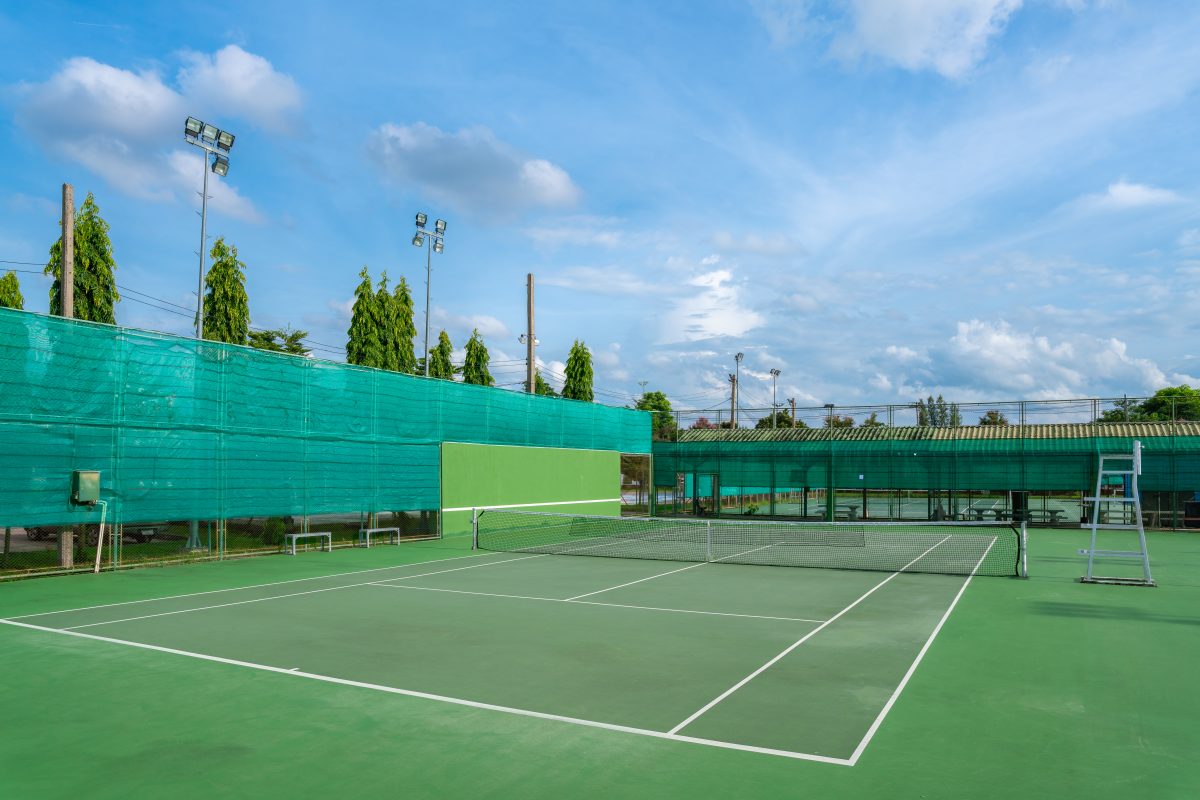
Budget Considerations
- Low-Cost: Concrete or asphalt with a non-slip coating.
- Mid-Range: Acrylic or modular tiles.
- Premium: Custom-designed synthetic turf or hybrid systems.
Consulting Professionals
Experts assess your location, climate, and usage needs. For example, coastal areas may require corrosion-resistant materials, while high-traffic courts need reinforced surfaces.
Personal Preferences
- Competitive Players: Prioritize traction and bounce consistency (acrylic or PVC tiles).
- Families: Look for cushioned surfaces, such as synthetic turf.
- Schools: Durable, low-maintenance modular tiles.
Maintenance Tips for Outdoor Courts
- Daily: Sweep debris to prevent slips.
- Monthly: Pressure-wash acrylic surfaces to maintain grip.
- Yearly: Inspect interlocking tiles for loose seams.
Why Choose Sundek Sports for Outdoor Badminton Court Flooring
When it comes to building a top outdoor badminton court, Sundek Sports Private Limited stands out as the leading name in India and globally for outdoor badminton court flooring manufacturers. With years of expertise and more than 5,000+ completed projects, Sundek is recognized as the top outdoor badminton court flooring manufacturer, delivering solutions that combine quality, durability, and innovation. Their flooring options include UV-resistant acrylic, interlocking PVC tiles, and hybrid systems, all designed to withstand harsh outdoor conditions without cracking, fading, or warping. These surfaces offer excellent shock absorption and traction, ensuring both safety and high performance for players at every level.
Our commitment to international standards is proven by BWF-approved surfaces, making them the best outdoor badminton court flooring choice for clubs, schools, and sports academies. The company provides transparent outdoor badminton court construction cost plans, so you know exactly what to expect without hidden charges. Every project is tailored to the client’s needs, from site assessment and custom design to expert installation and ongoing support. With a strong reputation for reliability, provide courts that not only look great but also perform exceptionally well for years. For anyone seeking a top outdoor badminton court that meets the highest standards of safety, performance, and longevity, Sundek Sports Private Limited is the trusted partner to bring your vision to life
Conclusion
The perfect outdoor badminton court balances durability, safety, and playability. Whether you prioritize budget, low maintenance, or professional-grade performance, the right flooring elevates every match. Start by evaluating your needs, consulting experts, and exploring materials that align with your goals.
Ready to build your dream court? Contact Sundek Sports Private Limited today at +91 98980 88059 or info@sundek.in for a free consultation. Let’s create a top outdoor badminton court that stands the test of time!
FAQ
1. Which material is best for outdoor badminton court flooring?
Acrylic and synthetic surfaces are popular for outdoor badminton courts because they offer durability, weather resistance, and good traction, making them safe and long-lasting for regular play.
2. How important is drainage for outdoor court flooring?
Efficient drainage is critical for preventing water accumulation, water, and surface damage. Good drainage ensures the court dries quickly after rain and remains safe and playable in all weather conditions.
3. Can I build an outdoor badminton court with concrete or asphalt as its base?
Yes, concrete and asphalt are commonly used as strong, stable bases for outdoor courts. They give a strong foundation but can need a top coat to improve grip and comfort.
4. How long does outdoor badminton court flooring last?
Outdoor badminton court flooring typically lasts 8-15 years with high-quality materials and regular care. Weather, usage, and care all affect the court’s lifespan.
5. What maintenance does outdoor badminton court flooring need?
Regular sweeping, cleaning, and occasional resurfacing keep the court safe and looking new. Promptly fixing cracks or drainage issues helps extend the flooring’s life.
6. Is outdoor badminton court flooring safe for all ages?
Yes, modern outdoor court surfaces are designed for safety, offering shock absorption and slip resistance, making them suitable for children and adults alike.
7. Can I install outdoor badminton court flooring myself?
Some modular and interlocking tiles are DIY-friendly, but for best results and durability, professional installation is recommended, especially for acrylic or synthetic surfaces.
8. Does the weather affect outdoor badminton court flooring?
Yes, excessive heat, rain, and ultraviolet (UV) radiation can have an influence on outdoor court surfaces. Choosing UV-resistant and weatherproof materials helps maintain performance and appearance.
9. What are the benefits of synthetic turf for badminton courts?
Artificial turf offers a supported, soft surface that is both safe and enjoyable for leisure use. It also provides excellent drainage and requires fewer repairs.
10. How do I choose the right outdoor badminton court flooring?
Consider your budget, local climate, usage, and personal preferences. Consulting with court flooring professionals ensures you select the best, most durable option for your needs
11. What is the cost of outdoor badminton court flooring in India?
Outdoor badminton court flooring in India typically costs between ₹100 and 300 per square foot, depending on materials like synthetic turf, acrylic, or interlocking tiles. Premium options may exceed ₹300/sq. ft., while basic concrete starts around ₹80-150/sq. ft. Prices vary based on durability and customization.