There’s a moment every badminton player knows. You step onto a court, take two quick shuffles, and instantly your body tells you the truth. The floor is either going to support your game or fight you for the next hour. That’s the real reason badminton court flooring is never a “small” decision. It shapes how players move, how safe they feel, how the shuttle speed reads, and how the court holds up after thousands of matches.
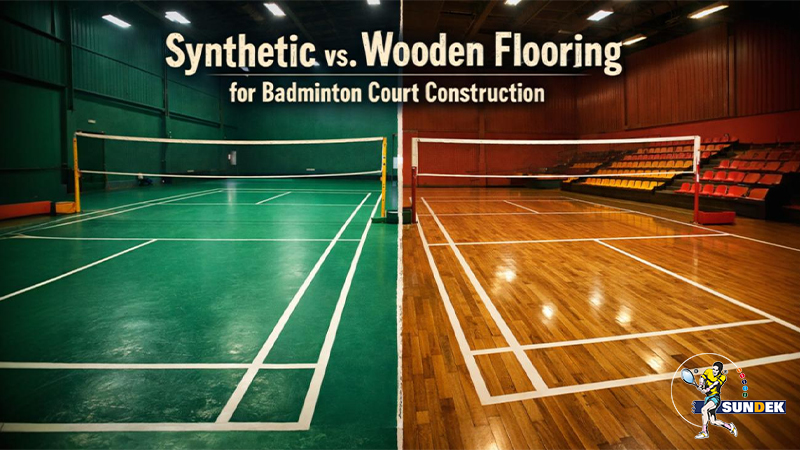
For anyone planning a new facility—or upgrading an existing one—the debate usually comes down to one question: Synthetic vs. Wooden Flooring for Badminton Court Construction. Both options can deliver excellent performance when selected correctly. But they perform differently, cost differently, and demand different maintenance habits. And if you pick the wrong one for your environment, the regret shows up quickly: slippery patches, joints feeling sore, frequent repairs, or a surface that loses grip long before it should.
Why Badminton Court Flooring Matters More Than Most People Expect
Badminton is a fast sport played in small spaces. Players accelerate, stop, lunge, twist, and jump constantly. That means the floor isn’t just something underfoot—it’s an active part of performance and injury prevention.
A proper badminton court surface is designed to offer:
- stable grip during side-to-side movement
- shock absorption to reduce joint impact
- consistent bounce and response under different conditions
- durability under repeated foot traffic
This is also why professional facilities follow Badminton World Federation (BWF) guidelines, particularly when building courts meant for tournaments, academies, or high-level training.
Sundek Sports Private Limited has been working in this space since 2004, and the difference between a “floor that looks good” and a “floor that plays right” is something you only truly understand after building courts for real users.
Understanding the Core Difference: Synthetic vs. Wooden Flooring
The decision is not about which flooring is “better” in general. It’s about which flooring is better for your use case. wooden flooring for badminton court is typically preferred for indoor courts where a premium playing experience is the priority. It is known for natural shock absorption and a smooth, professional feel. Synthetic flooring for badminton court is often chosen for its durability, easier maintenance, and flexibility across indoor and outdoor installations depending on the material type.
Wooden Flooring for Badminton Court: Where It Shines
If you walk into many high-end indoor badminton arenas, you’ll often see wooden flooring. And there’s a reason for it. When done correctly, wood delivers a playing experience that feels professional, responsive, and comfortable. The biggest advantage of wooden flooring for badminton court is the natural shock absorption and the way it supports controlled movement. Players who train frequently often prefer wood because it reduces strain during long sessions.
Wood is also visually appealing. It gives the court a classic look, which matters for premium academies and sports complexes where presentation is part of the facility’s brand. However, it’s important to be realistic. Wooden courts are best suited for controlled indoor environments. Moisture, temperature swings, and poor ventilation can affect performance over time. So wood is not a “set it and forget it” option. It needs care.
At Sundek Sports Private Limited, wooden court projects are planned with a strong focus on base preparation, level accuracy, and long-term surface stability, because the foundation makes or breaks the result.
Synthetic Flooring for Badminton Court: Why It’s Gaining Popularity
Synthetic flooring has grown massively in demand because it fits the practical needs of many facilities today. Academies want high durability. Schools want easier upkeep. Multi-sport halls want flexibility. And many buyers want a surface that stays consistent with less maintenance stress.
That’s where synthetic flooring for badminton court becomes a strong option. Synthetic surfaces are designed to offer reliable grip, good cushioning, and stable performance for training and recreational play. Many synthetic solutions are also easier to clean and maintain compared to wood, which is a big advantage for facilities with daily foot traffic.
Another major benefit is customisation. Synthetic courts can be designed with different textures, colours, and finishes. For many institutions, that matters because they want courts that match their environment, branding, or facility theme. And when you look at the bigger picture—especially cost and maintenance—synthetic flooring for badminton court often delivers strong long-term value.
Indoor vs. Outdoor Use
This is where a lot of people make the wrong decision. They compare wood and synthetic as if both are equal for any environment. They’re not. Wood is mainly an indoor solution. It performs best when the temperature and humidity remain stable.
Synthetic flooring can work indoors and, depending on the type, can also be used in outdoor badminton court flooring setups. Outdoor courts need weather resistance, high endurance, and surface stability under sunlight and changing conditions. If your project includes outdoor play, it’s not just a preference anymore. The flooring must match the environment.
This is one reason why Synthetic vs. Wooden Flooring for Badminton Court Construction is such a practical discussion for modern sports facilities. Because the correct answer depends on where the court is located and how it will be used.
Performance Factors That Buyers Should Compare (The Right Way)
Most comparisons online are too shallow. They talk about “wood is premium” and “synthetic is durable” and stop there. In real court construction, the decision comes down to performance factors. Here are the main areas that matter when comparing synthetic flooring for badminton court and wooden flooring for badminton court:
- Grip and Movement Control: Badminton requires fast lateral movement. Grip must be balanced. Too slippery and players lose confidence. Too rough and movement feel heavy.
- Shock Absorption and Comfort: A good surface helps reduce strain on knees and ankles. This is especially important for academies, training centres, and schools where players practise for long hours.
- Durability Under Foot Traffic: Courts used daily by students or academy trainees need flooring that holds up without quick wear.
- Maintenance and Cleaning: Wood requires more careful maintenance routines. Synthetic options are often easier to manage for institutions with limited maintenance staff.
- Long-Term Cost: The upfront cost is not the only cost. Maintenance, repairs, and replacement cycles matter too.
This is the real comparison buyers should focus on when evaluating Synthetic vs. Wooden Flooring for Badminton Court Construction.
A Practical Comparison (For Faster Decision-Making)
| Factor | Wooden Flooring for Badminton Court | Synthetic Flooring for Badminton Court |
| Best Use | Premium indoor courts | Indoor training + flexible facility use |
| Shock Absorption | Naturally strong | Designed cushioning depending on type |
| Grip | Professional feel when maintained | Consistent grip with lower maintenance |
| Maintenance | Higher and more sensitive | Easier for most facilities |
| Durability | Excellent indoors with care | Very strong for daily heavy use |
| Visual Appeal | Premium and classic | Modern and customisable |
Badminton Court Flooring Types: Where Acrylic and PVC Fit In
While most buyers focus on wood vs synthetic, the truth is that badminton flooring comes in multiple formats. The most discussed include synthetic surfaces, wooden surfaces, acrylic flooring, and PVC vinyl flooring. Acrylic flooring is widely used for outdoor courts because it is weather-resistant and built for high endurance. PVC vinyl flooring is also popular because it provides cushioned support and strong traction, which makes gameplay more comfortable.
The key is not the name of the flooring. The key is matching the flooring type to your usage pattern. At Sundek Sports Private Limited, this is handled through a proper site assessment first. Because a court built for tournaments is different from a court built for a school gym, and both are different from a private recreational setup.
Construction Process: Why Installation Quality Matters as Much as Material
A lot of buyers focus on the flooring type but overlook installation quality. In badminton court construction, even premium flooring can fail if the base is not prepared correctly.
The process typically includes:
- site assessment and measurements
- base preparation and levelling
- layout planning for singles and doubles markings
- surface installation based on chosen flooring type
- finishing and compliance alignment
This is also where experience matters. Since 2004, Sundek Sports Private Limited has built courts for multiple environments across India, and the same rule applies every time: the base and installation discipline decide long-term performance.
Safety and Injury Prevention: The Reason Flooring Is a Serious Investment
Badminton injuries often happen due to slips, poor grip, and hard impact. That’s why flooring is not just about playing quality. It’s about safety. High-quality badminton court flooring reduces risk by:
- providing stable traction for quick movement
- supporting controlled footwork during lunges
- reducing strain through shock absorption
- maintaining surface consistency over time
This is especially important for schools, academies, and sports clubs where players range from beginners to advanced athletes. Choosing between synthetic flooring for badminton court and wooden flooring for badminton court becomes easier when safety is treated as the priority, not an afterthought.
Badminton World Federation (BWF) Standards and Why They Matter
If your court is meant for professional use, tournament hosting, or serious training, then compliance with international standards matters. Badminton World Federation (BWF) guidelines exist because professional gameplay needs consistency. Court dimensions, markings, and surface behaviour affect the fairness and quality of play.
Sundek Sports Private Limited offers solutions aligned with BWF requirements, which gives facility owners more confidence when planning competitive-level courts.
Which Flooring Should You Choose? A Realistic Answer
If your goal is a premium indoor court with a traditional professional feel, and you’re prepared for proper maintenance, wooden flooring for badminton court can be an excellent choice. If your goal is long-term durability, easier upkeep, and strong daily performance for academies, schools, and multi-use facilities, synthetic flooring for badminton court often becomes the smarter option. So, the answer to Synthetic vs. Wooden Flooring for Badminton Court Construction is not one-size-fits-all. It depends on your environment, usage, and maintenance capability.
Why Choose Us
Choosing Sundek Sports Private Limited means working with a badminton court flooring manufacturer that has been delivering professional sports flooring solutions since 2004. Our approach begins with a proper site assessment and a design plan tailored to your facility, whether it’s a school gym, a sports complex, a training academy, or a private setup. We work with premium materials including synthetic, wooden, and acrylic flooring, and every court is planned to meet high standards of durability, grip, shock absorption, and long-term performance. From installation to maintenance support, Sundek Sports Private Limited focuses on building courts that feel right to play on, not just courts that look good in photos.
Conclusion
Choosing the right badminton court flooring is a decision that affects performance, safety, and long-term value. The real comparison of Synthetic vs. Wooden Flooring for Badminton Court Construction comes down to usage, environment, and maintenance expectations. Wooden flooring offers a premium indoor playing experience with excellent comfort, while synthetic flooring delivers durability, consistent grip, and easier upkeep for many facilities. With the right assessment and professional installation, both options can perform brilliantly. Sundek Sports Private Limited helps you select and install the right court flooring based on real project needs, not generic recommendations.
Want expert guidance on Synthetic vs. Wooden Flooring for Badminton Court Construction? Call Sundek Sports Private Limited at +91 98980 88059 or email info@sundek.in for pricing, technical details, and project consultation.
Key Takeaways
- Synthetic vs. Wooden Flooring for Badminton Court Construction depends on indoor/outdoor use, budget, and maintenance capability.
- wooden flooring for badminton court suits premium indoor courts with a professional playing feel.
- synthetic flooring for badminton court offers durability, stable grip, and easier maintenance for daily use.
- Installation quality and base preparation affect performance as much as the flooring material.
- Choosing a BWF-aligned solution improves trust and court usability for training and competitive play.
FAQs
Which is better: synthetic flooring for badminton court or wooden flooring?
Both can work well. The right choice depends on whether your court is indoor or outdoor, and how much maintenance you can manage.
Is wooden flooring for badminton court suitable for schools?
Yes, but it needs proper indoor conditions and consistent care. Many schools choose synthetic flooring due to easier maintenance.
Can synthetic badminton flooring be used outdoors?
Some synthetic systems and acrylic flooring options are designed for outdoor use, especially where weather resistance is needed.
Does flooring affect player injuries?
Yes. Proper grip and shock absorption reduce slip risks and lower strain on knees and ankles during fast movement.
Why should I consult Sundek Sports Private Limited before selecting flooring?
Because flooring choice should match your site conditions, usage, and long-term expectations, not just the initial cost.