

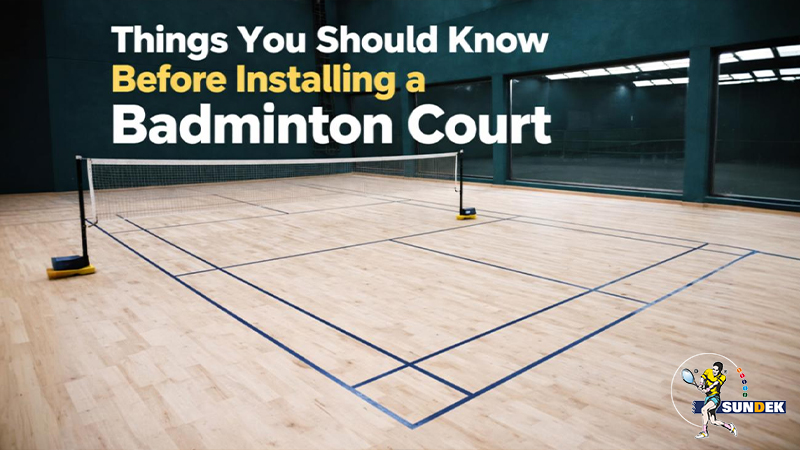
A badminton court looks simple on paper. Four lines, a net, and a clean indoor space. But the moment you start planning the actual build, you realise how many small decisions can quietly decide whether your court feels professional… or feels like a constant compromise. The floor might look fine in photos yet play slippery. The markings might be “almost right”, but players notice. The lighting might be bright but still create glare at the worst moments. And the biggest one of all? A court can be built with the best intentions and still become uncomfortable for players after just a few months.
Who will use this Badminton Court?
Before you think about flooring colours or surface type, the first step is understanding your users. A Badminton Court built for school students has different requirements compared to a court built for tournament training. A recreational club court needs durability under mixed skill levels, while an academy court needs consistency under daily intense footwork.
This matters because badminton is a sport of movement. Players lunge, recover, shuffle, and jump repeatedly. That means the court must support traction and shock absorption properly. If the surface is too hard, players feel it in their joints. If it is too slippery, injuries become a real risk. If the grip is inconsistent, the game quality drops.
At Sundek Sports Private Limited, this user-first approach is one of the biggest reasons courts perform better long-term. A court is not just built to match dimensions—it is built to match real usage.
Why Badminton Court flooring is the most important decision
If you want one section of this blog to stick in your mind, make it this: the floor is the heart of the court. Net height can be adjusted. Lights can be upgraded later. But Badminton Court flooring is the foundation, and changing it later is expensive, disruptive, and frustrating.
A high-quality badminton floor should provide:
- stable grip for fast direction changes
- shock absorption for repeated impact
- comfort for long training sessions
- durability under heavy foot traffic
- easy maintenance for long-term usability
Badminton is not like casual indoor walking. The movements are sharp and repetitive. That’s why standard indoor flooring is not suitable for serious badminton use. This is also why many people follow a structured badminton court installation guide before making final decisions. It prevents expensive mistakes and helps you build a court that feels professional from day one.
Indoor vs outdoor badminton court: don’t treat them the same
One of the most common mistakes is choosing materials without considering the environment. Indoor and outdoor badminton courts are not built the same way, and they should not use the same flooring approach. Indoor courts usually prioritise comfort, grip, and consistent performance. Outdoor courts require weather resistance and surface stability under changing temperatures and moisture.
Many clients approach Sundek Sports Private Limited after experiencing issues with outdoor courts that were built like indoor courts. The surface fades, grip changes during weather shifts, and maintenance becomes a constant struggle. The fix is always the same: match the flooring system to the environment from the start. If your court is indoor, focus on performance and player safety. If it is outdoor, focus on endurance and weather resistance.
Flooring types used in Badminton Court projects
There is multiple flooring options used for badminton courts depending on the project type, budget, and performance expectations. The most used include synthetic flooring, wooden flooring, acrylic flooring, and PVC vinyl flooring. Wooden flooring is highly preferred for premium indoor courts because it provides excellent shock absorption and a smooth professional playing feel. Synthetic flooring is popular because it offers durability, anti-slip properties, and flexibility for different facility requirements. Acrylic flooring is widely used for outdoor courts due to its weather resistance and endurance. PVC vinyl flooring is another popular choice because it provides cushioned support and reliable traction for comfortable gameplay.
The important thing is not just the name of the flooring. It is how well it is installed, how the base is prepared, and whether it is suitable for your specific usage. This is where working with an experienced supplier becomes valuable. Sundek Sports Private Limited helps clients select the right option based on actual playing conditions, not generic assumptions.
Site assessment: the step people skip (and later regret)
Most flooring problems do not start with the flooring. They start with the base. If the base is uneven, unstable, or has moisture issues, even the best Badminton Court flooring will struggle over time.
A proper site assessment helps identify:
- levelling requirements
- moisture behaviour in the space
- ventilation and humidity patterns
- structural readiness
- practical installation challenges
This is not just technical detail. It affects how the court feels to play on, how long it stays stable, and how much maintenance it demands later. A good badminton court installation guide always begins with site assessment because it prevents hidden issues from turning into expensive repairs.
Court markings and measurements: why precision matters
Badminton court markings look straightforward, but precision matters more than most people expect. A court that is slightly off becomes noticeable quickly, especially for players who train regularly. The court must support both singles and doubles play, with accurate measurements and clean markings.
When courts are built to align with international regulations, players trust the space. It feels right. Training becomes smoother. Matches feel fair. At Sundek Sports Private Limited, court design and markings are planned carefully because this is one of the details that separates a professional court from a “close enough” court.
Grip, shock absorption, and injury prevention: the real reason flooring is an investment
Badminton injuries are often caused by slips, poor traction, or harsh impact. A well-built Badminton Court is designed to reduce these risks by supporting safe movement.
High-quality Badminton Court flooring helps in three major ways:
- it reduces slip risk through stable traction
- it reduces strain on joints through shock absorption
- it supports confidence, which improves player movement
This matters for every type of facility, but especially for schools, academies, and sports clubs where players practise regularly. A good court protects players and also protects the facility’s reputation. When you invest in a court, you’re not just building a space. You’re building a safe environment for movement.
The installation process: what a professional build looks like
A professional badminton court installation is a structured process. It is not rushed, and it is not treated like ordinary flooring work.
A typical project includes:
- detailed site inspection
- customised design plan
- base preparation and levelling
- installation of the selected flooring system
- accurate court markings
- finishing and final quality checks
This process matters because badminton is a sport where small flaws become obvious. A slight unevenness affects footwork. Poor grip affects confidence. Incorrect markings affect play quality. Sundek Sports Private Limited provides end-to-end services, including installation, maintenance, and after-sales support, which is why clients often prefer working with one experienced team rather than coordinating multiple contractors.
Applications: where Badminton Court projects are most common
The demand for badminton courts continues to grow because badminton is now a key sport in schools, clubs, and training environments. A professionally built Badminton Court is commonly installed in:
- sports complexes and stadiums
- schools and universities
- badminton academies and training centres
- sports clubs and recreational facilities
- residential properties and private setups
- corporate offices and wellness spaces
- government sports hubs and public sports centres
Each of these environments has different needs, but the flooring and installation quality remain the deciding factor for long-term performance. This is why Sundek Sports Private Limited remains a preferred choice for clients who want professional-grade badminton court solutions across India.
Why Choose us
Choosing Sundek Sports Private Limited means working with a badminton court flooring manufacturer established in 2004, known for delivering high-quality indoor and outdoor sports flooring solutions across India. Our courts are designed to meet the highest standards of durability, performance, and aesthetics, with a strong focus on grip, shock absorption, and long-lasting reliability. Every Badminton Court project begins with a proper site assessment and a customised plan, followed by professional installation and dependable after-sales support. With Sundek Sports Private Limited, you get a court that feels right for players, stays consistent under heavy use, and supports long-term performance without constant maintenance trouble.
Conclusion
Installing a Badminton Court is not just about building a playing area—it’s about creating a safe, high-performance space that players can trust. The biggest factor is always Badminton Court flooring, because it controls grip, comfort, and durability. A proper badminton court installation guide starts with site assessment, correct base preparation, accurate markings, and the right flooring choice based on indoor or outdoor use. When planned correctly, a badminton court becomes a long-term asset for schools, clubs, academies, and sports facilities. Sundek Sports Private Limited supports clients with professional court construction designed for real-world play.
Planning a new Badminton Court? Contact Sundek Sports Private Limited on +91 98980 88059 or email info@sundek.in for flooring options, installation guidance, and expert support.
Key Takeaways
- A Badminton Court should be designed around real usage, not just dimensions.
- Badminton Court flooring is the most important decision for safety and performance.
- Indoor and outdoor courts require different flooring approaches.
- Site assessment and base preparation decide long-term court stability.
- A professional badminton court installation guide prevents costly mistakes and improves court lifespan.
FAQs
What is the best Badminton Court flooring for indoor courts?
Wooden, synthetic, and PVC vinyl flooring are commonly used indoors depending on budget, comfort needs, and maintenance expectations.
Can a Badminton Court be built outdoors?
Yes. Outdoor courts require weather-resistant flooring such as acrylic systems designed for long-term exposure.
Why is base preparation important in badminton court construction?
A poor base leads to uneven surfaces, reduced durability, and long-term performance issues even with premium flooring.
How long does badminton court flooring last?
Lifespan depends on material type, usage intensity, and maintenance. High-quality flooring installed correctly performs well long-term.
Why follow a badminton court installation guide?
It helps you plan the right flooring, avoid common construction mistakes, and build a court that stays safe and playable over time.