
There’s something brutally honest about squash. The rallies are fast, the footwork is relentless, and within minutes you know whether the court is working with you or against you. If the surface is slightly slippery, too hard, or uneven, players feel it immediately—usually in their knees, ankles, or confidence. That’s why installing the right squash court floor is not a cosmetic choice. It’s the foundation of performance, safety, and long-term value.
Why squash court flooring is not just “a surface”
Squash is a high-speed indoor racquet sport where players sprint, lunge, twist, and recover in a tight space. That movement pattern creates constant impact and heavy friction. A normal indoor floor simply isn’t built for that kind of punishment. The result is often a court that wears out quickly, becomes slippery, or feels too harsh underfoot.
Professional squash court flooring is designed to deliver the balance squash demands: controlled grip, consistent ball bounce, and shock absorption that supports intense play without turning every match into a strain on joints. This is why the right floor makes a difference for every level—from beginners learning footwork to tournament players relying on precision movement.
At Sundek Sports Private Limited, the goal is simple: build courts that feel safe, play consistently, and stay durable under real usage, not just on opening day.
What is squash court flooring?
Squash court flooring is a specialised playing surface engineered for squash-specific movement and ball response. It is designed to handle repeated impact, high-speed direction changes, and constant footwork while maintaining traction and stability. A quality squash court floor also supports acoustic performance inside the court, which matters more than people expect—especially for clubs where the court atmosphere is part of the experience.
Many professional squash courts use hardwood because of its natural resilience and shock-absorbing behaviour. Other solutions such as synthetic and acrylic flooring are also used depending on budget, facility requirements, and long-term maintenance preferences. What matters most is that the flooring system is chosen and installed as a complete solution, not as a standalone material. This is also where working with a specialist becomes important. A general flooring contractor might install a surface, but installing the right flooring for squash courts requires knowledge of sport-specific performance requirements.
The World Squash Federation (WSF) factor: why it matters
If your court is being built for serious play—tournaments, academies, professional clubs, or high-level training—international standards matter. The World Squash Federation (WSF) sets guidelines for court performance expectations. While many people focus on wall dimensions and glass back walls, flooring is equally critical because it influences player safety and movement control.
Sundek Sports Private Limited provides WSF-approved squash court flooring solutions, making them suitable for professional tournaments, sports academies, and recreational centres. For buyers, this approval is not just a badge. It’s a reassurance that the flooring is designed for real squash performance, not generic indoor sport use.
Choosing the right flooring for squash courts: what buyers should look for
The phrase right flooring for squash courts gets used a lot, but it’s often explained in vague terms. Let’s make it practical.
The right squash floor should deliver:
- Reliable grip without harsh friction: Squash demands quick stops and explosive push-offs. The surface must support traction without feeling sticky or abrasive. Too much grip can strain joints. Too little grip increases slip risk.
- Shock absorption that supports long rallies: Squash is repetitive impact. Good flooring reduces strain on knees, ankles, and hips, especially in training academies where players practise daily.
- Consistent ball bounce: A squash court is a performance environment. Players need predictable bounce and court response. Flooring must remain stable and even.
- Durability under heavy usage: Courts in clubs and universities see heavy foot traffic. Flooring must resist wear, warping, and surface degradation.
- Maintenance practicality: Some facilities have dedicated maintenance teams. Others don’t. Flooring choice should match what the facility can realistically manage.
This is why selecting the right flooring for squash courts is less about trends and more about matching your court’s purpose to the right technical solution.
The installation process: what a professional squash court build looks like
One of the biggest misconceptions is that squash court flooring is simply installed like standard indoor flooring. It’s not. A squash court needs precision because the sport magnifies small errors. A slight uneven patch becomes a slip risk. A poor base can lead to long-term instability.
A professional installation process generally includes:
- Site assessment and space evaluation: Before anything begins, the space needs to be checked for moisture behaviour, levelling conditions, and structural suitability. This step shapes everything that follows.
- Customised design plan: The court layout, player movement zones, and overall court configuration are planned to match intended use—club play, academy training, tournaments, or recreational use.
- Base preparation and levelling: This is where long-term performance is decided. A perfectly installed top layer still fails if the base is poorly prepared.
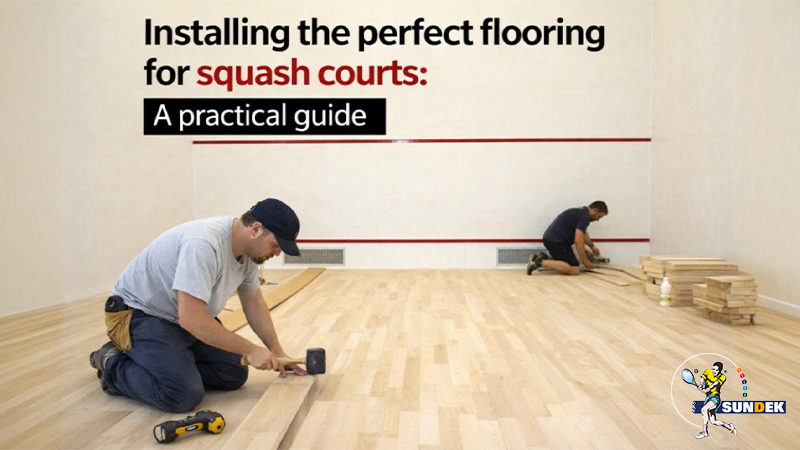
- Flooring installation: The chosen system—hardwood, synthetic, or another approved surface—is installed with sport-specific requirements in mind.
- Finishing and performance readiness: Markings, final checks, and surface readiness are completed so the court is playable and consistent.
At Sundek Sports Private Limited, this end-to-end approach is central to every project because squash courts don’t forgive shortcuts.
Common mistakes that ruin squash court flooring projects
This is the part most buyers appreciate, because it saves money and frustration later.
Here are the mistakes that commonly lead to poor results:
- Choosing flooring based only on cost rather than usage
- Ignoring moisture control and base levelling
- Hiring non-specialist installers unfamiliar with squash performance needs
- Skipping long-term maintenance planning
- Assuming all “sports flooring” behaves the same
The good news is that these problems are avoidable when you work with a specialist and follow a practical installation approach. This is exactly why many buyers choose Sundek Sports Private Limited as their project partner when they want a long-lasting result, not a surface that looks good for a few months.
Why grip and shock absorption are the two biggest priorities
If you remember only one thing from this guide, make it this: squash is a sport of footwork. Players don’t just run forward and back. They twist, lunge, recover, and pivot constantly. That makes grip and shock absorption the two most important flooring performance factors. Good grip improves confidence. Players stop cleaner and move faster. But grip must remain balanced—too much friction increases strain and can feel heavy.
Shock absorption protects the body. It supports longer rallies, reduces fatigue, and lowers the risk of injury over time. This is especially important for training academies and universities where players spend hours on the court each week. High-quality squash court flooring is designed around this balance, and it’s the reason a professional surface feels noticeably different from a standard indoor floor.
Who needs professional squash court flooring the most?
Squash court construction is not limited to elite sports complexes anymore. Many institutions now include squash courts as part of modern fitness and recreation infrastructure.
Professional squash court flooring is commonly required for:
- Sports clubs and private squash facilities
- Universities and schools building premium indoor courts
- Training academies focused on player development
- Corporate sports complexes and recreation centres
- Government and private sports hubs
- Residential and luxury communities adding premium amenities
Across all these spaces, the requirement is the same: a surface that supports safe movement and consistent play. This is why the demand for a reliable squash court flooring manufacturer in India has grown steadily in recent years.
Why Choose us
Choosing Sundek Sports Private Limited means working with a trusted sports flooring specialist established in 2004, with deep experience in squash court construction across India. As a professional squash court flooring manufacturer in India, we provide WSF-approved solutions designed for excellent grip, shock absorption, and long-term durability. Our process begins with proper site analysis and a tailored plan based on space, budget, and usage needs, followed by precise installation and reliable after-sales support. Whether your project is for a club, university, training academy, or recreational centre, Sundek Sports Private Limited delivers courts that feel right to play on from day one and stay consistent long after the first match.
Conclusion
Installing the perfect squash court floor comes down to choosing a surface built for squash movement, installing it with precision, and matching the solution to your facility’s usage. The right flooring for squash courts supports safe footwork, reduces strain through shock absorption, and keeps grip consistent during fast rallies. High-quality squash court flooring also improves long-term durability and maintains a reliable playing experience for beginners and professionals alike. With WSF-approved solutions and proven expertise, Sundek Sports Private Limited helps clubs, academies, universities, and sports centres build courts that perform properly and last.
Want expert help with installing the right flooring for squash courts? Call Sundek Sports Private Limited on +91 98980 88059 or email info@sundek.in for guidance, pricing, and project support.
Key Takeaways
- The right flooring for squash courts must balance grip, shock absorption, and consistent ball response.
- Professional squash court flooring is built for high-speed movement and heavy foot traffic.
- Installation quality and base levelling affect long-term court performance.
- WSF-approved flooring is ideal for tournaments, academies, and serious club courts.
- Working with a trusted squash court flooring manufacturer in India helps avoid costly construction mistakes.
FAQs
What is the best material for squash court flooring?
Hardwood is widely preferred for indoor squash courts, but synthetic options can also work depending on budget, usage, and maintenance expectations.
How do I choose the right flooring for squash courts?
Focus on grip, shock absorption, durability, and how often the court will be used. A site assessment helps match flooring to real conditions.
Is WSF approval important for squash court flooring?
Yes, especially for academies, clubs, and tournament-level courts. WSF-approved flooring aligns with international performance expectations.
How long does squash court flooring last?
Lifespan depends on usage intensity and maintenance. High-quality flooring installed correctly can deliver strong long-term performance.
Why choose a squash court flooring manufacturer in India like Sundek?
A specialist manufacturer supports the full project—material selection, installation expertise, and after-sales support—so the court performs consistently over time.