
Key Takeaways
- Squash Court Flooring Manufactuer selection plays a key role in project success
- Flooring directly impacts movement, comfort, and gameplay
- Hardwood and engineered wood are preferred for serious play
- Usage and environment should guide flooring choice
- A reliable Squash Court Flooring Manufacturer in India helps avoid costly mistakes
A squash court may look simple at first glance—four walls, a defined space, and a clean playing surface. But anyone who has played even a few matches knows the reality. If the flooring isn’t right, everything feels off. Movement becomes hesitant, footing feels uncertain, and the game loses its rhythm.
See our recommended WSF approved squash flooring systems.
That’s because squash is one of the fastest indoor sports. Players rely heavily on sharp footwork, quick stops, and rapid direction changes. The flooring directly affects how naturally all of this happens.
Choosing the right surface is not just a construction decision—it’s a gameplay decision. Working with a trusted Squash Court Flooring Manufacturer helps you build a court where players can move freely, stay comfortable, and enjoy every rally without distraction.
Why Flooring Plays a Critical Role in Squash
Squash demands explosive movement in a confined space. Unlike many sports, there’s very little room for error in footing.
A well-designed squash court floor contributes to:
- Confident movement during fast rallies
- Reduced impact on joints during lunges and jumps
- Consistent ball response across the surface
- Better overall player control
If the surface lacks grip or feels too hard, players subconsciously slow down. Over time, this not only affects performance but also reduces the appeal of the facility for regular users.
Types of Squash Court Flooring
1. Traditional Hardwood Flooring
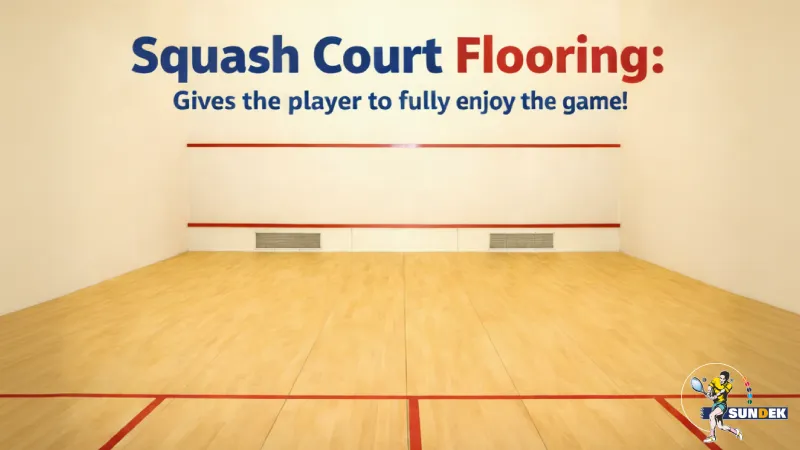
Hardwood flooring is widely used in professional squash courts.
- Offers natural shock absorption
- Smooth yet controlled surface for movement
- Preferred for competitive environments
In actual gameplay, hardwood allows players to move quickly without feeling unstable. However, it needs proper indoor conditions and periodic maintenance.
2. Engineered Wood Flooring
Engineered wood provides similar performance with added stability.
- Better resistance to humidity and temperature changes
- Maintains surface consistency over time
- Suitable for indoor courts in varying climates
For facilities in India, where environmental conditions can shift, this option often makes more sense than traditional hardwood.
3. Synthetic Sports Flooring
Some squash courts use synthetic materials, especially in multi-purpose sports setups.
- Durable under regular use
- Easier to maintain
- Suitable for recreational or beginner-level play
While practical, synthetic surfaces may not deliver the same playing feel as wood for advanced players.
Key Features That Define Good Squash Court Flooring
When evaluating flooring options, focusing only on the material is a mistake. Performance depends on how the surface behaves under real use.
Important factors include:
- Grip and traction: Helps players move confidently during quick turns
- Shock absorption: Reduces stress on knees and ankles
- Surface consistency: Maintains predible ball behaviour
- Durability: Handles repeated usage without rapid wear
- Maintenance requirements: Impacts long-term usability
Each of these factors directly influences how enjoyable and safe the game feels.
How to Choose the Right Squash Court Flooring
1. Identify the Court’s Purpose
- Professional matches
- Training and coaching
- Recreational play
A professional court demands a different flooring setup compared to a casual or training space.
2. Assess Usage Frequency
- High-traffic courts require durable materials
- Lower usage allows more flexibility
For example, a club hosting daily matches needs a more resilient setup than a private facility.
3. Consider Indoor Conditions
Environmental factors matter more than most people realise.
- Engineered wood performs better in fluctuating conditions
- Traditional wood suits controlled indoor environments
4. Plan for Maintenance
- Wooden flooring requires periodic upkeep
- Synthetic options are easier to manage
This directly affects long-term operational effort and cost.
5. Work with a Reliable Manufacturer
A professional Squash Court Flooring Manufacturer in India helps translate your requirements into a working solution.
They provide guidance not just on materials, but also on installation methods and long-term performance.
Real-World Example: Choosing the Right Setup
Consider a sports academy setting up two squash courts for regular training. Players range from beginners to intermediate level, and courts will be used daily.
- Engineered wood becomes a practical choice
- It offers performance similar to hardwood
- It handles environmental variation better
Now compare this with a premium sports club targeting competitive players. In that case, traditional hardwood flooring becomes the preferred option due to its playing characteristics.
The right decision always depends on usage, not assumptions.
Common Mistakes to Avoid
- Choosing flooring purely based on cost
- Ignoring player comfort and joint impact
- Overlooking environmental factors
- Skipping expert guidance during installation
These issues often show up only after the court is in use—when fixing them becomes expensive.
Why Work with a Professional Manufacturer
A skilled Squash Court Flooring Manufacturer brings clarity to decisions that are often misunderstood.
- Helps select flooring suited to your usage
- Advises on correct installation approach
- Reduces the risk of performance-related issues
This guidance helps avoid trial-and-error decisions that can affect both cost and player experience.
Why Choose Us
At Sundek Sports – we’ve got a pretty straightforward approach to squash court flooring – we think about how the floor is actually going to behave once the game is afoot. We don’t just recommend some generic solution that might work for anyone; we take a closer look at your specific setup – whether you’re a training academy, club, or competitive facility – and guide you towards a surface that makes sense for what you’re trying to achieve. It’s all about making practical decisions that balance performance, durability and maintenance from the get-go – so you can create a court that feels responsive and comfortable for players over time, without hitting any unnecessary snags along the way.
Conclusion
Squash is a game that’s all about speed, precision and control – and the floor is a key part of all three. Choosing the right surface makes all the difference – it determines how confident a player is in their movements, how comfortable they are playing, and how consistent the court is over time.
Hardwood’s always a good option for anyone who’s serious about the game but engineered wood and synthetics can also work well – as long as you match the flooring to how the court will actually be used.
Taking the time to think it through and get it right will help you avoid making common mistakes – and create a court that’s not just good for performance but also makes the most sense for how you want to use it long term. And when the flooring feels right – the game just becomes way more enjoyable for everyone. get it right in the first place. A well-chosen floor is more than just a pretty face – it actually makes the game better. just support the game – it genuinely makes it better.
Looking to build or upgrade a squash court? Call +91 98980 88059 or email info@sundek.in for expert guidance on selecting the right flooring solution.
FAQs
What is the best flooring for a squash court?
Hardwood and engineered wood are widely preferred due to their balance of grip, shock absorption, and performance.
Can synthetic flooring be used for squash courts?
Yes, it is suitable for recreational or multi-purpose courts, though it may not match wood in playing feel.
Why is shock absorption important in squash flooring?
It reduces stress on joints during fast movements, making the game more comfortable and safer.
How do I choose the right squash court flooring?
Consider usage, player level, indoor conditions, and maintenance before making a decision.
Why hire a squash court flooring manufacturer?
A Squash Court Flooring Manufactuer provides guidance on material selection, installation, and long-term performance..