

Key Takeaways
- Choosing the right flooring depends on usage, location, and budget
- Acrylic, PU, wood, and modular tiles each serve different needs
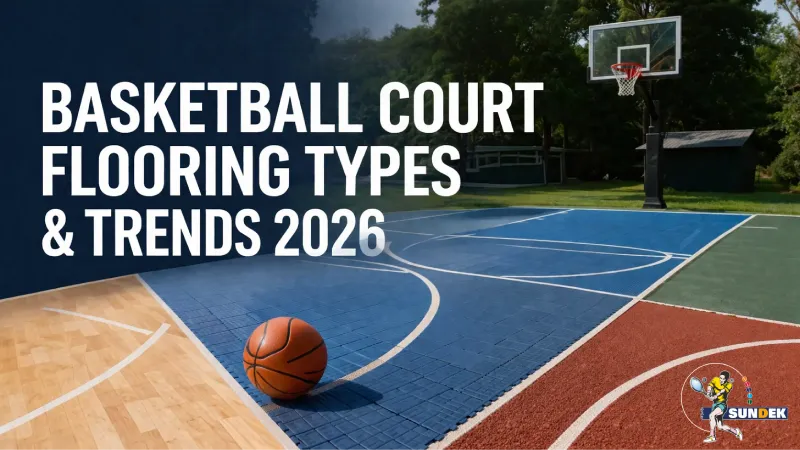
- Basketball Court Flooring Trends in 2026 focus on performance and sustainability
- Poor planning leads to higher long-term costs and performance issues
- Working with an experienced Basketball Court Flooring Manufacturer improves outcomes
Choosing the right basketball court flooring is about a lot more than just how it looks its got a direct impact on how the court performs how safe it is and how much you’ll end up paying for maintenance down the line. With more and more schools’ clubs and residential complexes looking to build out pro-grade sports infrastructure, the expectations for flooring systems have skyrocketed. Nowadays buyers aren’t just asking “what will work” – they’re wondering “what will last perform and fit in with what’s coming next” in the world of basketball flooring.
And that’s where Basketball Court Flooring Trends 2026 are really worth paying attention to – from cutting edge synthetic surfaces to eco-friendly options the industry is changing fast. If youre planning a new court or upgrading an existing one getting your head around what sort of flooring, you should be looking at – and finding a reliable Basketball Court Flooring Manufacturer to work with – can be a real game changer.
Let’s take a look at this in a more down-to-earth way – we’ll break it down in to what you need to know to make a practical & informed decision.
Understanding Basketball Court Flooring Types
Not all basketball courts are built the same. The choice depends on usage, budget, and environment—indoor or outdoor.
1. Acrylic Flooring Systems
Acrylic is widely used for outdoor basketball courts due to its durability and weather resistance.
- Smooth, non-slip surface
- UV-resistant and fade-resistant
- Low maintenance requirements
- Suitable for schools and public courts
It’s a practical option if you want a balance between cost and performance. However, it’s not ideal for high-impact indoor professional play.
2. Wooden Flooring (Maple Hardwood)
This is the gold standard for indoor basketball courts.
- Excellent ball bounce and player comfort
- Shock absorption reduces injury risk
- Preferred for professional and tournament-level courts
The downside? It requires controlled indoor conditions and regular maintenance. So, if you’re building a premium indoor court, this is where most serious buyers land.
3. Synthetic PU (Polyurethane) Flooring
PU flooring is gaining strong traction in modern courts.
- Seamless and cushioned surface
- High durability with good elasticity
- Suitable for both indoor and semi-outdoor environments
This option sits right in the middle—better performance than acrylic and less maintenance-heavy than wood.
4. Modular Tiles Flooring
A flexible and fast-growing option, especially in residential and multi-use spaces.
- Easy installation and replacement
- Good drainage for outdoor courts
- Customisable colours and designs
This is ideal if you need quick setup and minimal downtime, though performance can vary based on tile quality.
Key Factors That Influence Flooring Choice
Before jumping into trends, let’s get real—worst decisions happen because buyers ignore basics.
- Usage Type – Casual play, training, or professional matches
- Indoor vs Outdoor Setup – Weather exposure changes everything
- Budget Planning – Initial vs long-term maintenance cost
- Player Safety Requirements – Shock absorption and grip matter
- Maintenance Capability – Who will actually maintain the court?
If you don’t align these factors first, even the best flooring will feel like the wrong choice.
Basketball Court Flooring Trends in 2026
Now let’s talk about what’s actually changing in the market—and what you should pay attention to.
1. Multi-Layer Performance Surfaces
Modern courts are moving towards layered systems instead of single-layer coatings.
- Better shock absorption
- Improved durability
- Consistent playing experience
This is especially relevant for institutions that want long-term value instead of frequent resurfacing.
2. Eco-Friendly and Sustainable Materials
Sustainability isn’t just a buzzword anymore.
- Low-VOC coatings
- Recyclable materials
- Reduced environmental impact
Clients—especially schools and corporate campuses—are actively asking for greener solutions.
3. Custom Branding and Aesthetic Design
Courts are becoming visual assets, not just playing areas.
- Custom colours and logos
- Branded courts for schools and academies
- Social-media-friendly designs
This trend is huge in private clubs and premium residential projects.
4. Hybrid Indoor-Outdoor Solutions
Not every project fits neatly into indoor or outdoor categories.
- Semi-covered courts are increasing
- Materials that handle both moisture and performance demands
- Versatile flooring systems
This trend is particularly visible in urban spaces where flexibility matters.
5. Smart Surface Integration (Emerging Trend)
Still early but gaining interest.
- Sensor-based performance tracking
- Integration with sports analytics systems
- Data-driven training environments
It’s not mainstream yet, but forward-thinking facilities are already exploring it.
How to Choose the Right Flooring (Step-by-Step)
If you want a clear path instead of confusion, follow this:
- Define the purpose – Recreational, training, or professional use
- Assess location conditions – Indoor, outdoor, or hybrid
- Set a realistic budget – Include maintenance, not just installation
- Compare flooring types – Based on durability and performance
- Consult a reliable expert – A trusted Basketball Court Flooring Manufacturer
- Evaluate long-term value – Not just upfront cost
This process sounds simple, but skipping even one step leads to expensive mistakes later.
Common Mistakes Buyers Make
Let’s be blunt—these errors are everywhere:
- Choosing the cheapest option without understanding lifecycle cost
- Ignoring drainage in outdoor courts
- Overlooking surface grip and player safety
- Not checking installation expertise
- Treating all manufacturers as equal
A court is a long-term investment. Cutting corners here will show up quickly—in cracks, poor bounce, or player complaints.
Why Working with the Right Manufacturer Matters
The flooring type is only half the story. Execution decides everything.
A reliable Basketball Court Flooring Manufacturer doesn’t just supply materials—they guide the project from planning to finishing. They understand surface preparation, layering systems, and environmental factors. More importantly, they don’t push one-size-fits-all solutions.
Why Choose Us
At Sundek Sports Private Limited, it’s not just about laying down a court, it’s about getting a grip on how it’s really going to get used. Who’s going to be on it, how often, and what kind of conditions are they going to be playing in ? That’s the kind of insight that shapes the flooring recommendation – will it be acrylic for withstanding the rough stuff, PU for getting the best out of the players, or modular systems to make the most of limited space. With a whole lot of experience in getting sports infrastructure right, the team’s main priority is making sure the surface is top-notch, the install is done right, and it’s going to be usable for a long, long time. Instead of just slapping down some generic option, we aim to deliver a court that’s going to perform day in day out and actually meets the needs of the project, not just the specs on paper.
Conclusion
Choosing the right basketball court flooring is no longer just about getting the tech right – it’s a smart business move. With performance, safety and design all evolving, getting the inside scoop on Basketball Court Flooring Trends in 2026 means you can stay out in front and avoid playing catch-up later. The right flooring can really improve the game, cut down on maintenance headaches, and even extend the life of your investment. But here’s the thing – most of the problems that come up don’t come from the flooring material itself, it’s the planning and decisions made too early on that send the whole project off the rails. So it pays to be clear about what you need, to be honest with yourself about what will and won’t work, and to work with someone who actually knows their stuff – a real Basketball Court Flooring Manufacturer. Get it right, and a basketball court becomes more than just somewhere to play – it’s a space that people actually love using for years on end.et some proper expert advice along the way. A well-chosen floor doesn’t just support the game – it genuinely makes it better.
Looking to build or upgrade your basketball court? Get expert guidance today. Call +91 98980 88059 or email info@sundek.in to discuss your project requirements.
FAQs
Which flooring is best for outdoor basketball courts?
Acrylic flooring is commonly preferred due to its weather resistance, durability, and low maintenance needs.
Is wooden flooring suitable for all basketball courts?
No, wooden flooring works best for indoor courts with controlled environments. It’s not suitable for outdoor use.
What is the lifespan of basketball court flooring?
It depends on the material and maintenance. Acrylic and PU systems can last several years with proper care.
Are modular tiles a good option?
They are useful for quick installation and flexibility, especially in residential or multi-use spaces.
Why is choosing the right manufacturer important?
Because installation quality, material selection, and project guidance directly affect court performance and longevity.